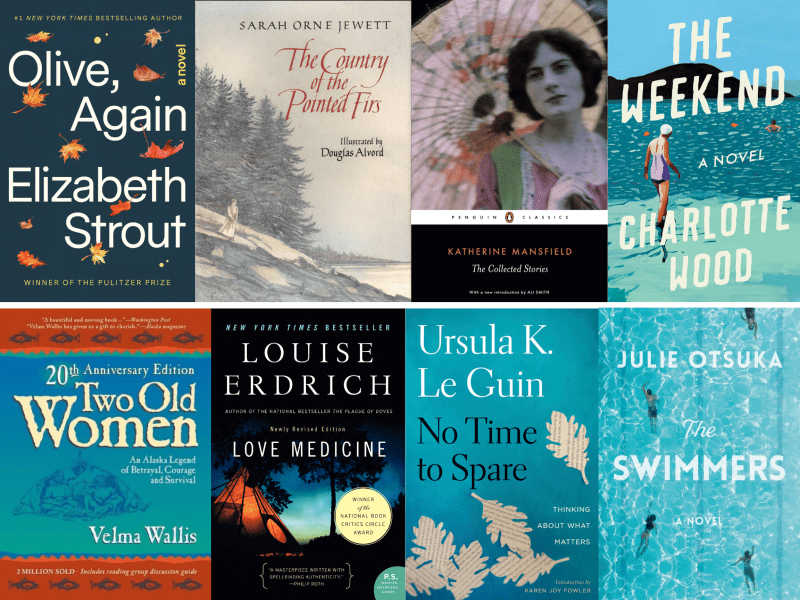
“Life after sixty can be wonderful and surprising, and coming to age can be profoundly satisfying.”

“Life after sixty can be wonderful and surprising, and coming to age can be profoundly satisfying.”


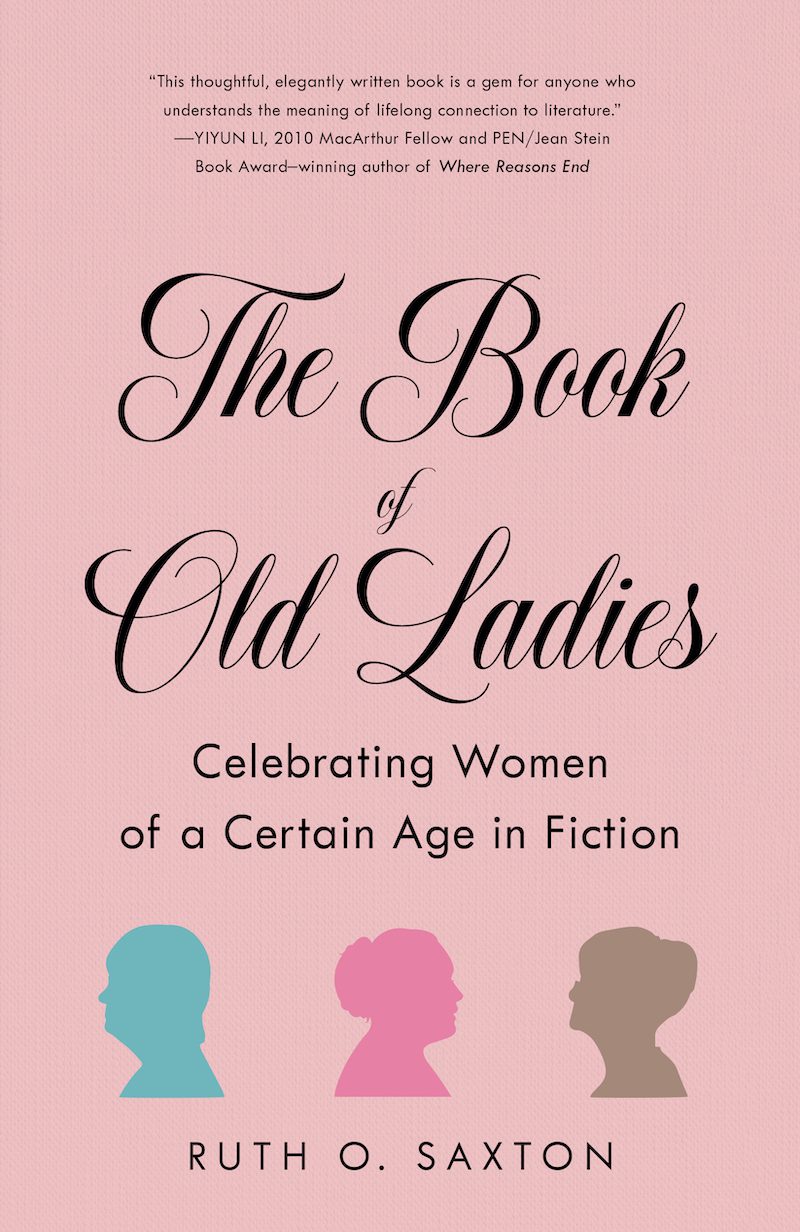
Please check out this wonderful review of The Book of Old Ladies and the terrific blog site, WOW: Women’s Older Wisdom.
I so appreciate this conversation, and very much enjoyed guest attending Pat’s class and hearing her wisdom and that of her amazing students whose stories moved and inspired me.
I am really pleased with this wonderful article about “The Book of Old Ladies” & my spring class Coming to Age with Mills students and elders from the Downtown Oakland Senior Center. I love its inclusion of so many Mills voices!

Professor Emerita Ruth Saxton offers alternate visions for “coming to age” in The Book of Old Ladies
By Dawn Cunningham ‘85
In her new book, Professor Emerita Ruth Saxton delves into the complex fictional worlds (and goes beyond the stereotypes) of elderly women.
“The more I read, the more I appreciate stories in which old ladies not only survive the huge losses of their lives, such as divorce, death of a spouse, serious illness, forced retirement, or alienation from adult children, but discover undeveloped parts of themselves, sometimes defy limiting conventions and habits that no longer serve them well. Stories of satisfying lives after loss lift my spirits and affirm what I have observed not only personally but also in life writing—in journals, diaries, biographies, and memoirs”
Interview with Christine Hyung-Oak Lee in “The Rumpus”


Q: You write that as you grew older, “I began to look for plots that might help me map a possible future beyond the familiar fairy tale where the old woman is stereotyped as either the wicked witch or the fairy godmother.” How did you eventually decide to write this book?
A: I have always looked to fiction by women writers to offer models of ways of being that allowed me to imagine myself and others in new ways.
Click to Read the Interview
I was invited to Guest Blog for “Read Her Like An Open Book”As I approached my sixtieth birthday, I began to notice that in the books I included on the syllabus for my popular course “Contemporary Fiction by Women,” none of the protagonists were anywhere near my age. Instead, women my age were secondary characters, mothers or grandmothers, usually included only because of their importance to the central character, a marriageable daughter or even a young girl. The older woman might be described in considerable detail, but only from the outside, through a younger person’s perspective. I was troubled by the stereotypes that seemed to categorize her as either wicked witch or fairy godmother.
Thank you Bill Wolfe for the invitation!
“In her famous essay on fiction and the role of the modern novel, “Mr. Bennett and Mrs. Brown,” Virginia Woolf claims that the task of the novelist is to catch in words the old lady in the railway carriage. This book is the result of my searching contemporary fiction by women for glimpses of those elusive old ladies who, a century after Woolf’s call for them, remain nearly invisible. Like Woolf’s Mrs. Brown, an old woman may sit in the carriage. Or she may sit quietly on the bench of a London park, like the invisible women of Doris Lessing’s novel The Diary of a Good Neighbour. She may sit quietly reading on an airplane, in a meeting, in the waiting rooms of public institutions. What does she notice? What does she make of the snippets of conversation she overhears? What is the interplay of present observations and memories in her mind? Does she enjoy the sun on her skin? Does she relish her flexibility after that recent hip replacement? Is she composing a melody or a poem as she pulls the needle through her embroidery? Woolf wrote that she never managed to tell the truth about the body, and I think most readers assume she meant the sexualized body. However, increasingly I think that fiction has often focused exclusively on the sexualized body rather than the embodied person as a whole. I looked and continue to look for stories of older women in which they notice not only their desire but also their strength, the beauty they apprehend through their sight and hearing, the life-giving breath that sustains them.”

Notable Old Ladies Blog
I just finished teaching the final course of my 46 years at Mills College–“Coming to Age,” a collaboration between 18 students and about twice that many members of the Downtown Oakland Senior Center. Jennifer King, Director of the DOSC and a Mills alumna, helped create a format that fit the schedule of the center’s members and also worked for students.
We planned to meet together four of the sixteen class sessions, once monthly from February through May. The seniors created plans for an additional session and chartered a bus to Mills, but Covid 19 forced us to cancel, and we met for the second half of the semester on Zoom.
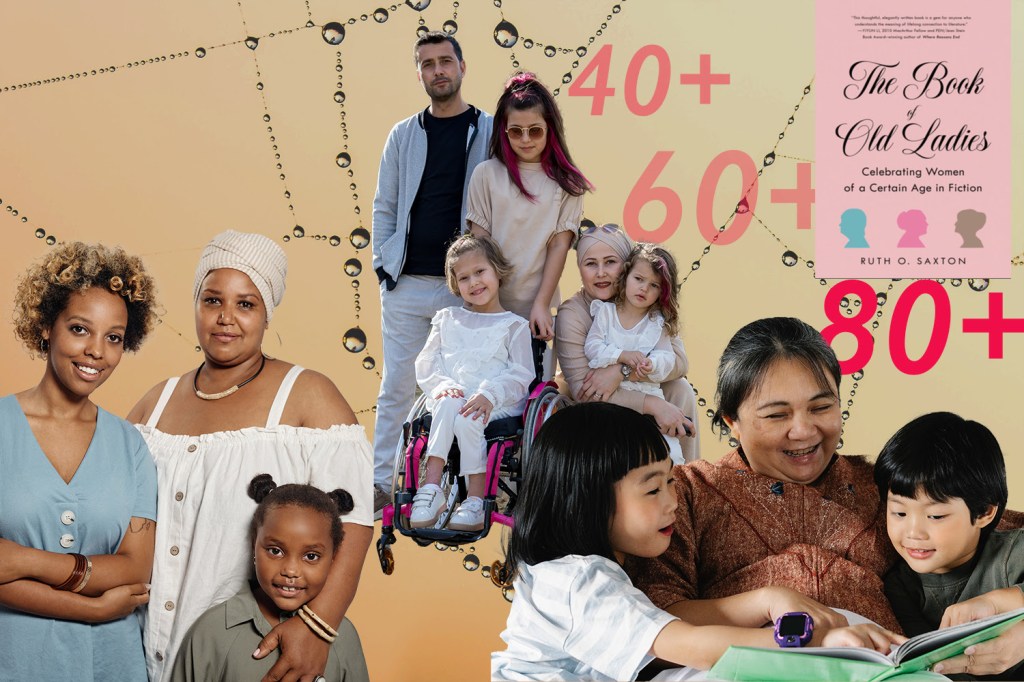
We read selected stories I feature in my forthcoming book, The Book of Old Ladies: Celebrating Women of a Certain Age in Fiction. We loved comparing our responses in animated discussions in person and on the course blog. Not only did students disagree among themselves, but seniors also noticed details the students had overlooked, and everyone brought lively insights to our conversations.
But, now the course has ended. Although I have been asked to continue the course, I can’t create that same magic again. Instead, I look forward to opening shared reading and discussion to a wider group, using this blog as a space to share my reflections and my interviews and other relevant content
I hope that eventually the blog provides a public space in which to move beyond The Book of Old Ladies and the spring course into conversations that introduce additional stories of women of a certain age–primarily, but not exclusively, in fiction. Some of those stories fall outside the structure of my book, others I have discovered since, and still others are only now being written. After years in which I could not find stories focused on the present lives of older women characters–not just their pasts–I am excited to introduce stories that move beyond what I have come to call “mini appearances of old women as secondary characters” or “death-bed bookends” to engaging stories that get inside the heads of old women, see the world through their eyes, and abandon tired old stereotypes.
I invite you to read along with me.
Please share your ideas and discoveries of Notable Old Ladies in Fiction and Beyond!