Senior Book Notes

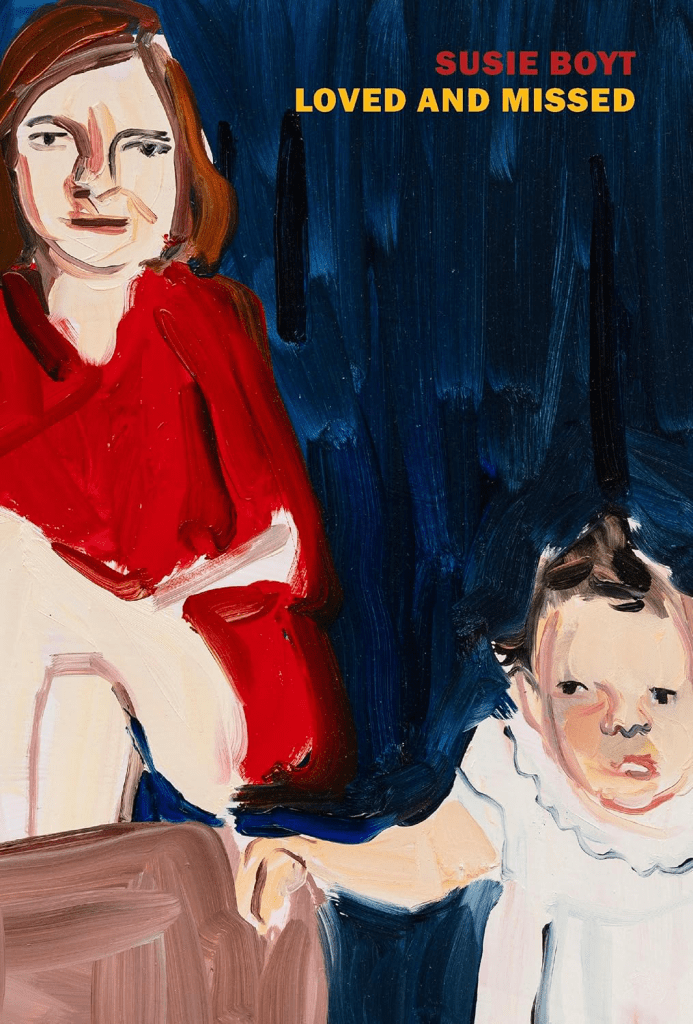
Love and Missed by Susie Boyt (2023)

This short novel, about 150 pages, tells the story of Ruth, who raises her granddaughter Lily, because Lily’s mother/Ruth’s daughter, Eleanor, is addicted to drugs. 

After someone dies of an overdose in Eleanor’s apartment, Ruth hands her daughter an envelope of cash and takes Lily home with her, and Lily, as she grows, is a delightful and loving, if overly self aware, well behaved child, and the relationship between her and Ruth is touching, powerful, and hopeful.

We all agreed we are glad we read Susan Boyt’s beautifully written novel. Several readers found it compelling and read it in one big gulp, while some of us found it so  intense  we had to read in small installments. This poignant novel is filled with so many insights that those of us who take notes or use post its, found phrases and words to savor on nearly every page–far too many for us to share.

We all admire Ruth, the mother of a daughter who at age thirteen begins to fulfill every parent’s fears–turning to drugs and addicts and avoiding and refusing all of Ruth’s attempts to connect, to please her, to alter her own behaviour in hopes of connecting. 

Boyt’s portrayal of Ruth and her estranged daughter is clear eyed, non-judgemental and heartbreaking. We soon realize that this story will not include an amazing recovery, rehab program, or fairy tale ending, but Ruth is able to rescue the already addicted emaciated baby Lily, and the story of her raising Lily is filled with love. Like Tillie Olsen’s stories, Boyt captures the sensual quality of a baby’s skin, the intoxicating pleasure of skin on skin, laughter and delight despite Ruth’s serious insecurity, and doubting herself.

One reader did a bit of research on the author learning she is one of Lucien Freud’s fourteen children and though not an analyst as our last author was, had trained as a bereavement counselor. 

We discussed the stereotypes of children of addicts, the notions that the body never forgets trauma, and we appreciated the book’s depiction of a healthy life ahead of Lily who is fifteen at the novel’s end. Lily might be described as a parentified child, aware from her reading and experience that her mother is lost to her, but the generosity of her grandmother and her grandmother’s community, despite economic and emotional hardship, leaves us hopeful for her future.

We talked about the title, taken from a tombstone and the many ways it can be parsed. How do you read the words? 

This is British writer Susie Boyt’s seventh novel, and the first to be published in the United States, and I hope its success means more of her books will be available here. I have a sense many of us will be looking for them. hungry for more of her insightful stories.

Senior Book Notes

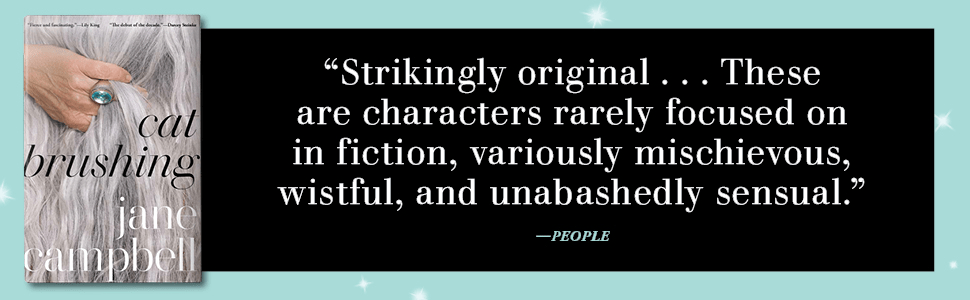
Cat Brushing  by Jane Campbell 2022

In her debut collection of short stories, Cat Brushing, 80-year-old British author Jane Campbell aims to set the record straight about “women of a certain age.”

I will share from the The San Francisco Chronicle review of the collection at some length, as I found it useful context, and you may as well:

what began in 2017 as an impromptu sketch piece inspired by a two-week holiday in Bermuda with her eldest son and daughter-in-law turned into a no-holds-barred collection of 13 dirty, doughty and often wickedly funny stories that cover everything from common misconceptions about aging (no, grandmothers aren’t only there to serve their grandchildren, and, yes, their thinking processes can be just as deep and nuanced as they were at a youthful 30) to erotic desire (or the long-overdue liberation from sexual obligation) to retaining agency as “an oldie.” The best part? They’re all narrated by mouthy women who are through with being patronized.

This, like most of the reviews I read, suggest the collection is rather delicious fun, using terms such as “wickedly funny” or “delightfully shocking.” However, upon reading the collection I was struck that many of the stories offer a pattern that is far darker: elderly female characters finally do what they want, which feels cathartic and empowering but only briefly, as most of the stories close bleakly, with the women bound under the judgment of others.

I wondered how we would respond, given our status as elderly readers,some of us older than Campbell when she published the stories about women in our age cohort.

I had purchased the hardcover copy soon after its publication, but set it aside and so listened to the stories because of my macular degeneration. Then, at our meeting, I had trouble getting onto the zoom link and missed the first part of group discussion. Discombobulated by the problems, I forgot to take any notes.

However, in response to my plea for help, Diane, Annette, and Patricia provided excellent notes, making it possible for me to give you a glimpse of our group’s responses to the collection.

At least three of us did not like the collected stories overall, but  altered our dissatisfaction as we listened to other group members.  One common complaint was the recurrence of abrupt negative endings that overwhelmed what had been a generally positive or capacious take on the older woman’s experience.

Many of us noted the ways the collection demonstrates how traumatic childhood experiences, such as incest or extreme emotional distance from a parent, do not disappear with age.

We also noticed that Campbell kept our focus on the elderly woman’s experience by providing indirect clues rather than didactic explication or description, and that these clues got us thinking about the likely relationships between the character and significant people in her life. 

Some of the most shocking stories portray women choosing dramatic deaths–from cutting in the bath to be discovered by visiting adult offspring who are more distressed by the mess than the loss of their parent to the suicide of a woman whose youthful affair has remained the love of her life in memory but was just a fling for the man she has stalked. These stories prompted conversations about the potentially stark differences between individual memories of events and the pain that such differences can cause.

We appreciated the tender story that opens the collection in which Susan, a bedridden elderly woman is ready for death until she unexpectedly experiences desire for Miffy, the young caregiver and rediscovers the importance of touch. We were struck by how the story’s description of loving touch, outside the “norms” of traditional erotica or caregiving, contrasts to the superficial programmed way of caring portrayed by others.

We were somewhat amused by the Schopenhauer story’s ending in which the woman manages to destroy her robot caaretaker, and we discussed this hostile substitute for human companions and helpers. Those of us who had read Ishiguru’s Klara and the Sun noted the strong contrast with Kim and Klara, yet how both were designed to be a companion for a lonely human.

We speculated that Campbell’s long career as an analyst may have influenced her fictional portrayals. I had purchased her first novel, published two years after the short story collection, and after our discussion I found it in my library. Freudian analysis plays a central part, and is nearly a character of its own, both in that novel and in Cat Brushing. In the end, we agreed that, Campbell’s text provokes thought, if not pleasure.

.A link to the titular story from London Review of Books: https://www.lrb.co.uk/the-paper/v39/n21/jane-campbell/story-cat-brushing

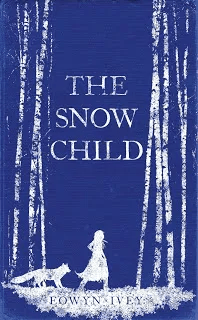
The Snow Child

by Eowyn Ivey (2012)

“Like many fairy tales, there are many different ways it is told, but it always begins the same. An old man and an old woman live happily in their small cottage in the forest, but for one sorrow: they have no children of their own. One winter’s day, they build a girl of snow.

The Snow Child is based on  the Russian folktale Snegurochk, which means “Snow Maiden,” about a couple who build a child out of snow.

The novel is set in Alaska in 1920; it tells the story of Jack and Mabel, a couple trying to forge a new life in the wilderness where they moved a little less than two years after their only child was stillborn. They are homesteaders, clearing land and hoping to farm it in order to claim the land as their own.

Place is central in this novel. Ivey was raised in Alaska and still lives there; and as The Guardian review notes, the novel, her debut. “is so saturated with wilderness atmosphere that you almost feel you’ve been there yourself.” Her love for this challenging landscape shines through, and we appreciated her narrative’s tremendous capacity to situate us in a place none of us are familiar with. 

When Jack is injured, Mabel, who arrived in Alaska with book learning and a skill for fine work,  steps up to the physical challenges of sowing potatoes and reeling in fish. We appreciate her strength. 

Mabel and Jack both develop over the course of the novel, and Jack is portrayed with as much tenderness as Mabel.  The Snow Child narrates the growth of both partners within a single marriage over a long period as gender roles and preconceived notions gradually loosen in the shared hardship of their new life.

One day, the couple playfully builds a snowgirl, but the next morning she is gone. Instead, they start to catch glimpses of a small blond girl off in the trees. The novel’s fairy tale origins are strong, and at times you find yourself wondering if poor Mabel and Jack will be sucked into some occult fairyland of deathless ice maidens, Angela Carter-style. Or will they simply buckle down to mending their damaged relationship, bonding over the muddy rows of potato seedlings in a more heartwarming result? 

Retelling fairy tales allows a writer to experiment with setting and character development, but always in the background is the plot of the original tale. Although Mabel’s sister assures her that she can write new endings, as readers we cannot escape the outlines of the tales that have been pulled into the light. We know in our bones that the Snow Maiden, that elusive girl who offers them a new chance, cannot exist in “real life”– she thrives in the ice and snow and freedom of living on her own in nature. The baby boy she births helps Mabel and Jack and ties up the story’s loose ends but it is a mere fantasy ending that we did not feel replaced the far more convincing ending of the original tale.  The novel’s conclusion wraps all up in a magical heartwarming fashion that left us unconvinced.

However, our conversation was lively, and as we listened to each other we each recalled details that made the characters and the setting feel real and nuanced despite the end result of a bit too sweet of an ending.

In case you are interested: there is a musical is based on this tale! Check out the NPR story:

https://www.npr.org/2018/05/02/606509836/snow-child-conveys-alaskas-wild-magic-in-musical-form

Click for a four minute listen

Erotic Stories for Punjabi Widows

Balli Kaur Jaswal (2018)

The premise of Balli Kaur Jaswal’s Erotic Stories for Punjabi Widows is pretty compelling: Nikki, a young British-Punjabi woman, takes a creative writing job at her local temple, hoping to emancipate the community’s women with her modern ideals. She finds the women she’s teaching are barely literate widows who have no interest in her grand plans. But these women, who’ve spent their lives in the shadows of fathers, brothers, and husbands, have incredibly rich inner lives and some very interesting, and very spicy, stories to tell.

What really stands out about this novel is how it centers women who are typically ignored—in this case, older widows in the Punjabi community. As one reviewer put it, Kaur Jaswal gives voices to women who are generally voiceless, and she lets them talk about sex, no less. It’s a bold move that crashes through conventions and insists that every woman, no matter how invisible she may seem, has stories worth telling and deserves to be heard.

When we met on Zoom, I wasn’t sure how the conversation would go. I’d listened to the audiobook and found myself experiencing a weird mix of embarrassment, fascination, and unexpected interest—probably thanks to my Evangelical upbringing. The creative fruit and vegetable metaphors amused me (banana and cucumber I’d heard of at bridal showers, but aubergine and eggplant were new!).

However, what really drove our discussion was not the novel’s sexy shock value; instead, we dove into its many layers—arranged marriages, oppressive gender roles, double standards, generational cultural clashes, and even a murder mystery woven throughout.

As reviewers have noted, this book is wildly ambitious. It’s an immigrant novel in the tradition of The Joy Luck Club and White Teeth that offers serious commentary on the daily subjugation of women, as well as a murder mystery, a romance, and so forth. That’s a tough balance, and sometimes the book felt overwhelming with its multiple plots and stories-within-stories.

We noticed the generally negative portrayal of men in the novel, which contrasted with the actual Sikh men some of us have known. It made us think about how few fully realized, decent men appear in women’s fiction generally, perhaps because of the generally oppressive nature of the way various social systems uphold misogyny and the real risks women face from those systems, both at a general and personal level of violence or erasure.

We loved certain characters who felt fully developed (though honestly, most of the widows blurred together after a while, which we found a problem). The climactic scene of the older women’s collective capacity to rescue the younger more modern woman was powerful. However, the novel wraps up rather quickly with all loose ends tied up: it felt a bit too tidy.

The book deserves praise for its sympathetic portrayal of women across generations—the widows, the younger women, and their parents—all struggling for independence, love, and achievement in a larger society marked by racism, sexism, and materialism.

Erotic Stories for Punjabi Widows may not be perfect, but it’s a novel that makes you think, laugh, and see the invisible women around you in a whole new light.

Senior Book Notes

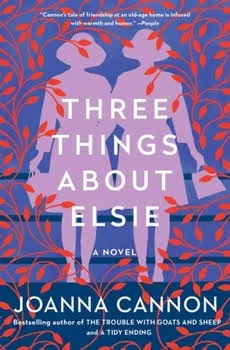
Three Things About Elsie  Joanna Cannon (2018)

There are three things you should know about Elsie. The first thing is that she’s my best friend. The second is that she always knows what to say to make me feel better. And the third thing…might take a bit more explaining.

Eighty-four-year-old Florence has fallen in her flat at Cherry Tree Home for the Elderly. As she waits to be rescued, she thinks about her friend Elsie and wonders if a terrible secret from their past is about to come to light. If the charming new resident is who he claims to be, why does he look exactly like a man who died sixty years ago?

Booklist describes the novel as

a tender and charismatic look into life in a nursing home. Cannon effortlessly captures the home’s slow routines, along with the ways that staff and residents coexist but often know little about each other . . .

When we met on Monday afternoon to discuss this novel, we all agreed we were glad we read it, but, perhaps predictably in a novel that focuses on the confusions of memory and truth, each of us had questions about the actual facts of the plot. 

We were not all sure what was actually “the truth” about Elsie, or about Florence, and we differed about certain “facts” in the novel about the past.

Spoilers ahead! Don’t Read if you don’t want to know what happens!

**************************************************

For example, we asked each another: When did it first become obvious to you that Elsie was not a resident of the home? When did Elsie die? Did she die in the fire Florence mistakenly believed she had caused? 

Several of us realized Elsie was not present in the retirement residence but did not realize she died in the fire. We all knew Elsie was Florence’s best friend, that they were very close friends, but not that Flo’s only love was Elsie, that after Elsie died, Florence never married or had children because she, Elsie, was her true love.

We talked about the retirement home, our own determination to avoid such places if possible, the patronizing tone of Miss Bissel and Miss Abrose toward the residents, the tendency to disbelieve those who are forgetful and tending toward dementia.

We agreed that Cannon’s characters–both residents and staff–were believable and well drawn. We praised her handling of the braided plots, Flo’s memories as well as the mystery plot. We appreciated the writing, and all of us had favorite lines, too many to record even with the help of post-its or underlining. 

The ending felt forced for some of us. Rodney’s arrest after so many years, the likelihood that he would end up at the same retirement home as Florence after so many decades. And that he would have access to her flat in his attempts to undermine her testimony about the past by accentuating her dementia. 

We speculated about the significance of the jet black amulet Flo notices beneath the baseboards from her fallen position on the floor.

We recognized the plot resembles what I label “deathbed bookends” in my book of old ladies, and yet we did not want to critique Cannon as we hadSusan  Minot for using this plot structure. After a bit, we realized Minot  had placed as the emotional center of her novel an unrequired sexual encounter from the protagonists’ past whereas Cannon provided a much fuller portrait of Flo’s current life and explored the aftermath of trauma.

Around the edges of our focus on the novel, we exchanged some of our own experiences: from visiting family members in such retirement homes, to differentiating between dementia and normal cognitive lapses, to experiences being patronized by younger people who call is by diminutive labels or refer to us in third person.

We liked Flo, and we wondered when she  began considering Elsie was present, when Elsie was part of herself. Was the third thing about Elsie that Elsie had died? Was it that she loved Elsie? What do you think?


Senior Book Notes

August 22, 2025

Mrs. Quinn’s Rise to Fame by Olivia Ford (2024)

August 11th was our first week back from our summer break!

We faced a variety of technological issues that could have derailed us: my computer would not work, and I had to meet via the phone (a challenge even without my vision loss!); another member ‘s hearing aids were not properly working with her zoom connection, and so forth, but we were not deterred!

Our shared generosity and good humor, our delight at making it back to the group, reminds me of how important our book discussions are, and how important community is. We do our best to show up for one another, regardless of how many pages were each able to read between caretaking and the overwhelming tasks I lump under “maintenance” of our aging bodies and living spaces, gardens, responsibilities to beloved family and friends, and simply managing in these complicated and upsetting times.

And the book? Well, we agreed it was a distraction from the chaos of local and world politics and and frequent despair.

We enjoyed some parts about it but we also found the writing was not equal to what we usually encounter. We are experienced readers, not critics, and yet reading this novel reminded us of what we often take for granted in the books we select: we assume excellent writing, or at least writing that does not make us glitch as we read. This book’s prose did not impress us, and we wondered if the author’s work as a television producer influenced the style.

The novel tells the story of Mrs Jenny Quinn, who, after fifty-nine years of marriage, as her husband Bernard’s health declines, and her friends’ lives are increasingly focused on grandchildren—which Jenny and Bernard do not have—secretly applies to be a contestant on the prime-time TV show “Britain Bakes.”

While she delights in the experience, the competition starts to unearth memories buried decades ago. Chocolate teacakes remind her of a furtive errand involving a wedding ring; sugared doughnuts call up a stranger’s kind act; a simple cottage loaf brings back the moment her life changed forever. Jenny struggles to keep a lid on a long-concealed secret that she has kept from her husband.

As readers, our group expects major characters to learn or develop from their experiences, and we sometimes experience our own expansion of insight, humanity, or knowledge as readers. In this case, we were less transformed or expanded by the reading than we might have hoped, but we, as always, brought to it our own interests and biases and the book thus that created an enjoyable discussion.

Some of us are bakers and enjoyed the recipes even as we would probably not not bake such sugary confections. Some enjoy the “Great British Bake Off” and appreciated the behind the scenes descriptions of competition.

Most of us liked Jenny Quinn, though we differed in our understanding of her secrecy from her beloved Bernard. Why did she never tell him why she did not want children? And why did she keep her application to the baking competition a secret?

We differed among ourselves as to the deeper causes of her secrecy. Was she so wounded by her experience as a seventeen year old giving birth in a home for unwed mothers that she was terrified Bernard would not marry her if she told him about that experience? And was she right that he would not love her if he knew the truth? We felt surely he would not have have stopped loving her or left her after years of close marriage if she confided in him. Even those of us who tried to understand or at least not judge her had a hard time understanding the lesser secrecy regarding the baking competition which made little sense to us as readers. Jenny’s total naivete regarding social media was also difficult for us to accept, especially given the presence of young relatives in her life.

The serious plot of Jenny’s past experience hit some of us by surprise in the ways it was dropped into the plot. Unlike for example Claire Keegan’s fiction (which we also read for our group), this novel did not increase our historical knowledge or particularly move us.

I doubt that any of us will recommend this novel to our friends, but we all agreed it was a nice distraction from the news, a good enough summer “beach read,” and we really enjoyed being back from our summer vacation and reading and talking together again.
Remember! We’d love you to read with us! Send us your thoughts! Either here or through email!

Senior Book Chat

Sipsworth by Simon Van Booy (2024)

Following the loss of her husband and son, 83 year old Helen Cartwright returns to the village of her childhood after living abroad for six decades. Her only wish is to die quickly and without fuss. She retreats into her home on Westminster Crescent, becoming a creature of routine and habit: “Each day was an impersonation of the one before with only a slight shuffle–as though even for death there is a queue.”

Then, one cold winter night, a chance encounter with a mouse sets Helen on a surprising journey. Over the course of two weeks in a small English town, this reclusive widow discovers an unexpected reason to live.

A Southern Review of Books reviewer notes that “Booy depicts aging and atrophy, loneliness and invisibility, with compassion,” and we largely agreed. Our responses to the book were mostly positive, from simply loving it to enjoying its fairytale qualities. The least positive was “I didn’t hate it” from a reader who prefers more character development and would have liked to know more of Helen’s inner life. 

A  reader in the group pointed out the effects of the author’s portrayal in minute detail of the repetition in Helen’s day, including the order of TV shows, the blurring of news from which she feels disconnected. We brought in many of our own observations about the invisibility of the elderly,  the difficulty of making new friends late in life, and the value of community.

It is no longer Helen’s world to think about. And in her mind it is the same news over and over again, with the only difference being that people think they’re hearing it for the first time. When there is a string of robberies in the village, Helen thinks, “But what does she have to steal? This is a place where everything of value has already been taken.”

We were surprised when we learned Helen had been a famous cardiologist in Australia, and we wondered what prompted her to return to her birthplace after so many decades. We wondered if she had friends, and noting Helen’s remarks about Dr. Jamal’s kindness as so different from her own way with patients, we considered that she may have been as single minded and unkind as Dr. Swenson in State of Wonder.

I think we all found her relationship with the small mouse heart warming, regardless of its probability. We may have laughed a bit at her sudden conversion to vegetarianism, but we agreed on the need for relationships with other people and were happy to see her come out of her depressive isolation and desire to die.

Stories such as Sipsworth can transport us away from the quotidian dailiness of our lives, just as the mouse transports Helen, opening us to delight and hope beyond the chaos of the broken world.  Like the fairytales of our childhoods, such stories, however fantastic, can awaken us to the power of kindness and connection and care,

We were a bit amused that this series included three tales of elderly women and animals from the octopus of Brightness to the parrots of How to Read a Book to the small mouse of Sipsworth. Common to all three of these very different stories was a move, through a connection with the animal, from loneliness and loss to newfound community and possibility.

Senior Book Chat

How to Read a Book: A Novel Monica wood

“The perfect pick to really light a fire under my book club, and yours….A reminder that goodness, and books, can still win in this world.” —New York Times Book Review

Monica Wood’s 2024 novel of fresh starts follows Violet, a 20-something woman fresh out of prison; Harriet, a retiree who leads a book club inside the women’s prison; and Frank, the retired machinist whose wife was killed in the hit-and-run for which Violet served time.

When I asked our book group what word they would associate with Wood’s novel, the first word was “forgiveness.” 

Reading about Harriet’s careful preparation for her weekly book group discussions in the women’s prison, I initially felt somewhat self-conscious about my comparatively less arduous preparation. Harriet prepared discussion questions and tried them out on her niece Sylvia. She even began each session with a short affirmation. 

But then I reassured myself that the members of the Downtown Oakland Senior Center book group are experienced readers. Our meetings follow a structure we have found useful: everyone in our group shows up prepared to call our attention to a particular passage, whether a favorite or one they find confusing or frustrating, and explains why we chose it. I am the convenor, but I do not control the conversation.  

What both groups have in common is the ability to escape into a book, to treat the characters as “fellow creatures” in Harriet’s words, and to respect one another and our differing opinions, in our case less from radically different life experiences, although certainly we have different paths, but more from our differing responses to the reading. It is interesting to consider, despite the general contours of our lives, how those responses are shaped by experience.

We appreciated Wood’s characters with their resolutely human gifts, kindnesses, and flaws. We appreciated that no characters are presented as completely evil or saintly, allowing us to experience them as fully realized.

  We liked the portrayal of second chances, not only for Violet but also for Harriet and Frank, both widowed, both capable of mature love with partners less judgemental  than their original spouses. Although Violet’s sister and Frank’s daughter both misjudge them, we have a sense they too may eventually be able to forgive. 

As in Beautiful Creature, we were taken with the non-human creatures as well, in this case African grey parrots. After her release from prison, Violet is hired as a lab assistant for  a research professor who studies  African grey parrot parrots, known for their amazing ability to mimic human speech and capable of memorizing hundreds of words. One of the delightful features of the novel is its description of the parrots, and Wood provides bibliographic links for readers who want to learn more about these fascinating birds.

The two novels are also similar in the way the authors tie up loose ends in the conclusions: both provide happy endings that, however improbable, are satisfying and just within the realm of the possible, avoiding the saccharine, thanks to realistic characterization. Violet’s coda at the end of the novel, with its account of her failed early marriage and the professor who takes advantage of her, reminds us not to give up on ourselves or others. Violet’s eventual contentenments–her much happier second marriage, three children, and grandchildren who all enjoyed Ollie–are pathways that seemed impossible in her early life.

I may investigate Wood’s other fiction when I yearn for kindness in ordinary fellow creatures and the possibility of second chances and forgiveness and love in our harried, chaotic and often callous world. 

Senior Book Chat

Dearborn by Ghassan Zeineddine  (2023)

  • Winner of the 2023 Khayrallah Book Prize
  • Finalist for the 2024 CLMP Firecracker Award for Debut Fiction
  • Shortlisted for the 2024 William Saroyan International Prize for Writing

Spanning several decades, Ghassan Zeineddine’s debut collection examines the diverse range and complexities of the Arab American community in Dearborn, Michigan. In ten excellent stories, Zeineddine explores themes of identity, generational conflicts, war trauma, migration, sexuality, queerness, home and belonging, and more.

The New York Times review beautifully articulates how I feel about these stories of immigrant experience:

Dearborn’s characters are split on what part of America is worth acquiring, what part must be resisted and how deep anyone is allowed to dream at all.

We had a good discussion, as always with this terrific group, and we agreed that these compelling stories drew us in, and we all wanted to know more.

However, I needed more help than usual from the group. My beloved dog scratched my eye, a particularly frustrating event given my already poor vision, so I could not manage taking notes on this collection, leading discussion, or taking notes on the group chat for this blog post. After the discussion, I asked people to send me notes and this blog is a group effort!

Patricia, to whom we are indebted for her recommendation of the book, opened the discussion; and several members sent me notes afterward. This week was even more than usual a clear demonstration of the value of community, an apt theme for this collection!

Several members talked about the way the author uses humor even when his stories deal with pain and regret. All of us were struck by the story of “Speedo” with its portrayal of humor and nostalgia as well as the charm of a modern “peddler” con man. Members reminded me how we appreciated, as a group, the “diversity of ethnic background, circumstances and personalities presented in the stories” and reminded me how we applauded the refreshing frankness about sexuality coupled with humor. We discussed the complex portrayals of marriages in the stories, which while located in specific local space, varied as in all spaces and groups between the good, the meh, and the abusive and ugly.

We discussed the stories’ references to the recent past, when Dearborn was a typical mostly white suburban town and barricaded itself against protests in Detroit in contrast to its now status as a vibrant community with a large immigrant population. The references to ICE are chillingly current.

The collection includes a variety of immigrant experiences and attitudes: from those who are able to return for a visit to their home country, those who cannot, and those who have no desire — either to return or in some cases, of the generation born in the states, to visit a country they have never seen. We hear of the longings of place: whether a past homeland or a dreamed future one, in Manhattan or Los Angeles.

The collection provides food for thought regarding traditional values and social relationships as they shift between nations and generations. We wondered about the effects — both toward less and more tolerance–as people navigated different value systems. We considered the ways the collection invites us to consider how success is valued in different cultural spaces. Does the desire for economic power motivate moving? Or is it created by being in the US? Or both?The collection presents such questions and issues without editorial judgment. Instead, the confident narrative lets us see how the characters are feeling.
Despite our varying connections with Lebanon, most of us knew little of the Lebanese community in Dearborn.

The two collections of short stories in our current series veer from our usual selections that focus on older female protagonists. Although we intend to return to that early focus, we all agree that these stories led to important insights both about immigrant communities, whether in Danticat’s portrayals of the Haitian diaspora or Zeineddine’s stories of the Lebanese diaspora, and about the ways in which cultural values shift, personalities abide, and community and tolerance and care are essential.

Senior Book Chat

The Friend by Sigrid Nunez 2019 Virago

.

When the narrator unexpectedly loses her lifelong best friend and mentor, she finds herself burdened with the large Great Dane he has left behind. Her own battle against grief is intensified by the mute suffering of the dog, and by the threat of eviction the dog harbors, as dogs are prohibited in her building.

Isolated from the rest of the world, increasingly obsessed with the dog”s care, and determined to read its mind and fathom its heart, the narrator comes dangerously close to unravelling, but, unsurprisingly perhaps, the novel is about the deep bounds of friendship its title suggests.

This book received a hugely positive critical response: it was listed as one of the New York Times Best books of the 21st century; won the 2018 National Book award, and was described generally in superlatives as a moving novel of grief and emotional depth, a delightful and delicious read.

And reader, upon first listen? I did not like it one bit.

When I noted my lack of enthusiasm, someone suggested that since the writing had been compared with that of one of my most favorite writers, Virginia Woolf, they were surprised I had such a grumpy reaction to it.

Both Woolf and Nunez write about death, about grief, and ultimately about writing itself. What appeals to me in Woolf’s characters, the artist Lily Briscoe and her plight, and not Nunez’s unnamed writer? Initially, I thought perhaps it was a matter of character development. Woolf’s Mrs. Ramsay and Lily interact, seem real somehow in a way Nunez’s narrator did not for me.  But is that really true? I am not sure. 

Perhaps it is a matter of prose style, or referentiality. I was a bit irritated at the abundance of literary allusions, even though I recognized most of them; however, some of the group enjoyed them. 

Perhaps, and here I am most sure, it was the masculinist space of the writing world she describes. The novel is fully engaged in the world of the professional writer and the profession of writing and teaching writing. I was both put off and bored by the male womanizing writing professor and the near fandom of his many students, particularly the women. This reminds me of a world I have been proximal to but have never been interested, let alone been fascinated by. I find the heated self conscious and self important literariness decidedly unerotic and intellectually dull. I cared only about  Apollo, the great Dane rather than any of the human characters that populated the novel.

In contrast, some members appreciated the friendly relation between the woman and her mentor, a friendship primarily based on intellectual conversation and shared intelligence. Despite, or perhaps because of, their different professional alignments, many found relatable truths in the novel’s portrayals of the friendship of a writer and her mentor. 

While I remain unmoved by the mentor relationship or the literary world the novel engages, with some consideration and attention to the groups’ insightful observations, I began to realize I had missed what most interested them, and what in retrospect I realize is the novel’s great strength: its meditations on grief, and particularly its moving engagement with grief after a suicide. Here are two quotes about grief that moved readers:

Nothing has changed. It’s still very simple. I miss him. I miss him every day. I miss him very much.

But how would it be if that feeling was gone?

I would not want that to happen.

I told the shrink: it would not make me happy at all not to miss him anymore.

What we miss – what we lose and what we mourn – isn’t it this that makes us who, deep down, we truly are. To say nothing of what we wanted in life but never got to have.

It is this thematic center of the novel that touched most of the group.

On the whole, members of the group are glad we read this novel, and because our experiences differed so much, our discussion was lively. 

Some members considered the entire account of Apollo a narrative conceit to make sense of her mentor’s suicide attempt and are convinced the reality is the embedded account of her visit to the man with the dachshund who survived the attempted suicide and spent time in a psychiatric hospital. 

This is a novel about writing and what it does; passages comment for example on the role of writing and memory:

You write a thing down because you’re hoping to get a hold on it. You write about experiences partly to understand what they mean, partly not to lose them to time. To oblivion. But there’s always the danger of the opposite happening. Losing the memory of the experience itself to the memory of writing about it. Like people whose memories of places they’ve traveled to are in fact only memories of the pictures they took there. In the end, writing and photography probably destroy more of the past than they ever preserve.

We talked about the many ways we use writing to process and record our experience and feelings, from private diaries and journals to memoirs or for accounts we have inherited or are creating for others.

The Friend touched each of us and led to lively discussion. I may even need to read it again.