Senior Book Notes

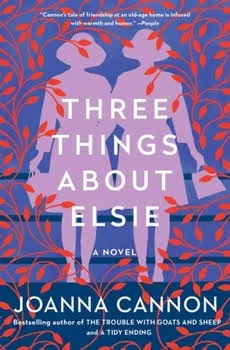
Three Things About Elsie  Joanna Cannon (2018)

There are three things you should know about Elsie. The first thing is that she’s my best friend. The second is that she always knows what to say to make me feel better. And the third thing…might take a bit more explaining.

Eighty-four-year-old Florence has fallen in her flat at Cherry Tree Home for the Elderly. As she waits to be rescued, she thinks about her friend Elsie and wonders if a terrible secret from their past is about to come to light. If the charming new resident is who he claims to be, why does he look exactly like a man who died sixty years ago?

Booklist describes the novel as

a tender and charismatic look into life in a nursing home. Cannon effortlessly captures the home’s slow routines, along with the ways that staff and residents coexist but often know little about each other . . .

When we met on Monday afternoon to discuss this novel, we all agreed we were glad we read it, but, perhaps predictably in a novel that focuses on the confusions of memory and truth, each of us had questions about the actual facts of the plot. 

We were not all sure what was actually “the truth” about Elsie, or about Florence, and we differed about certain “facts” in the novel about the past.

Spoilers ahead! Don’t Read if you don’t want to know what happens!

**************************************************

For example, we asked each another: When did it first become obvious to you that Elsie was not a resident of the home? When did Elsie die? Did she die in the fire Florence mistakenly believed she had caused? 

Several of us realized Elsie was not present in the retirement residence but did not realize she died in the fire. We all knew Elsie was Florence’s best friend, that they were very close friends, but not that Flo’s only love was Elsie, that after Elsie died, Florence never married or had children because she, Elsie, was her true love.

We talked about the retirement home, our own determination to avoid such places if possible, the patronizing tone of Miss Bissel and Miss Abrose toward the residents, the tendency to disbelieve those who are forgetful and tending toward dementia.

We agreed that Cannon’s characters–both residents and staff–were believable and well drawn. We praised her handling of the braided plots, Flo’s memories as well as the mystery plot. We appreciated the writing, and all of us had favorite lines, too many to record even with the help of post-its or underlining. 

The ending felt forced for some of us. Rodney’s arrest after so many years, the likelihood that he would end up at the same retirement home as Florence after so many decades. And that he would have access to her flat in his attempts to undermine her testimony about the past by accentuating her dementia. 

We speculated about the significance of the jet black amulet Flo notices beneath the baseboards from her fallen position on the floor.

We recognized the plot resembles what I label “deathbed bookends” in my book of old ladies, and yet we did not want to critique Cannon as we hadSusan  Minot for using this plot structure. After a bit, we realized Minot  had placed as the emotional center of her novel an unrequired sexual encounter from the protagonists’ past whereas Cannon provided a much fuller portrait of Flo’s current life and explored the aftermath of trauma.

Around the edges of our focus on the novel, we exchanged some of our own experiences: from visiting family members in such retirement homes, to differentiating between dementia and normal cognitive lapses, to experiences being patronized by younger people who call is by diminutive labels or refer to us in third person.

We liked Flo, and we wondered when she  began considering Elsie was present, when Elsie was part of herself. Was the third thing about Elsie that Elsie had died? Was it that she loved Elsie? What do you think?


Senior Book Chat

Sipsworth by Simon Van Booy (2024)

Following the loss of her husband and son, 83 year old Helen Cartwright returns to the village of her childhood after living abroad for six decades. Her only wish is to die quickly and without fuss. She retreats into her home on Westminster Crescent, becoming a creature of routine and habit: “Each day was an impersonation of the one before with only a slight shuffle–as though even for death there is a queue.”

Then, one cold winter night, a chance encounter with a mouse sets Helen on a surprising journey. Over the course of two weeks in a small English town, this reclusive widow discovers an unexpected reason to live.

A Southern Review of Books reviewer notes that “Booy depicts aging and atrophy, loneliness and invisibility, with compassion,” and we largely agreed. Our responses to the book were mostly positive, from simply loving it to enjoying its fairytale qualities. The least positive was “I didn’t hate it” from a reader who prefers more character development and would have liked to know more of Helen’s inner life. 

A  reader in the group pointed out the effects of the author’s portrayal in minute detail of the repetition in Helen’s day, including the order of TV shows, the blurring of news from which she feels disconnected. We brought in many of our own observations about the invisibility of the elderly,  the difficulty of making new friends late in life, and the value of community.

It is no longer Helen’s world to think about. And in her mind it is the same news over and over again, with the only difference being that people think they’re hearing it for the first time. When there is a string of robberies in the village, Helen thinks, “But what does she have to steal? This is a place where everything of value has already been taken.”

We were surprised when we learned Helen had been a famous cardiologist in Australia, and we wondered what prompted her to return to her birthplace after so many decades. We wondered if she had friends, and noting Helen’s remarks about Dr. Jamal’s kindness as so different from her own way with patients, we considered that she may have been as single minded and unkind as Dr. Swenson in State of Wonder.

I think we all found her relationship with the small mouse heart warming, regardless of its probability. We may have laughed a bit at her sudden conversion to vegetarianism, but we agreed on the need for relationships with other people and were happy to see her come out of her depressive isolation and desire to die.

Stories such as Sipsworth can transport us away from the quotidian dailiness of our lives, just as the mouse transports Helen, opening us to delight and hope beyond the chaos of the broken world.  Like the fairytales of our childhoods, such stories, however fantastic, can awaken us to the power of kindness and connection and care,

We were a bit amused that this series included three tales of elderly women and animals from the octopus of Brightness to the parrots of How to Read a Book to the small mouse of Sipsworth. Common to all three of these very different stories was a move, through a connection with the animal, from loneliness and loss to newfound community and possibility.

Interview with Christine Hyung-Oak Lee in “The Rumpus”

“The more I read, the more I appreciate stories in which old ladies not only survive the huge losses of their lives, such as divorce, death of a spouse, serious illness, forced retirement, or alienation from adult children, but discover undeveloped parts of themselves, sometimes defy limiting conventions and habits that no longer serve them well. Stories of satisfying lives after loss lift my spirits and affirm what I have observed not only personally but also in life writing—in journals, diaries, biographies, and memoirs”

Interview with Christine Hyung-Oak Lee in “The Rumpus”

Welcome!

Notable Old Ladies Blog


I just finished teaching the final course of my 46 years at Mills College–“Coming to Age,” a collaboration between 18 students and about twice that many members of the Downtown Oakland Senior Center. Jennifer King, Director of the DOSC and a Mills alumna, helped create a format that fit the schedule of the center’s members and also worked for students.

We planned to meet together four of the sixteen class sessions, once monthly from February through May. The seniors created plans for an additional session and chartered a bus to Mills, but Covid 19 forced us to cancel, and we met for the second half of the semester on Zoom.

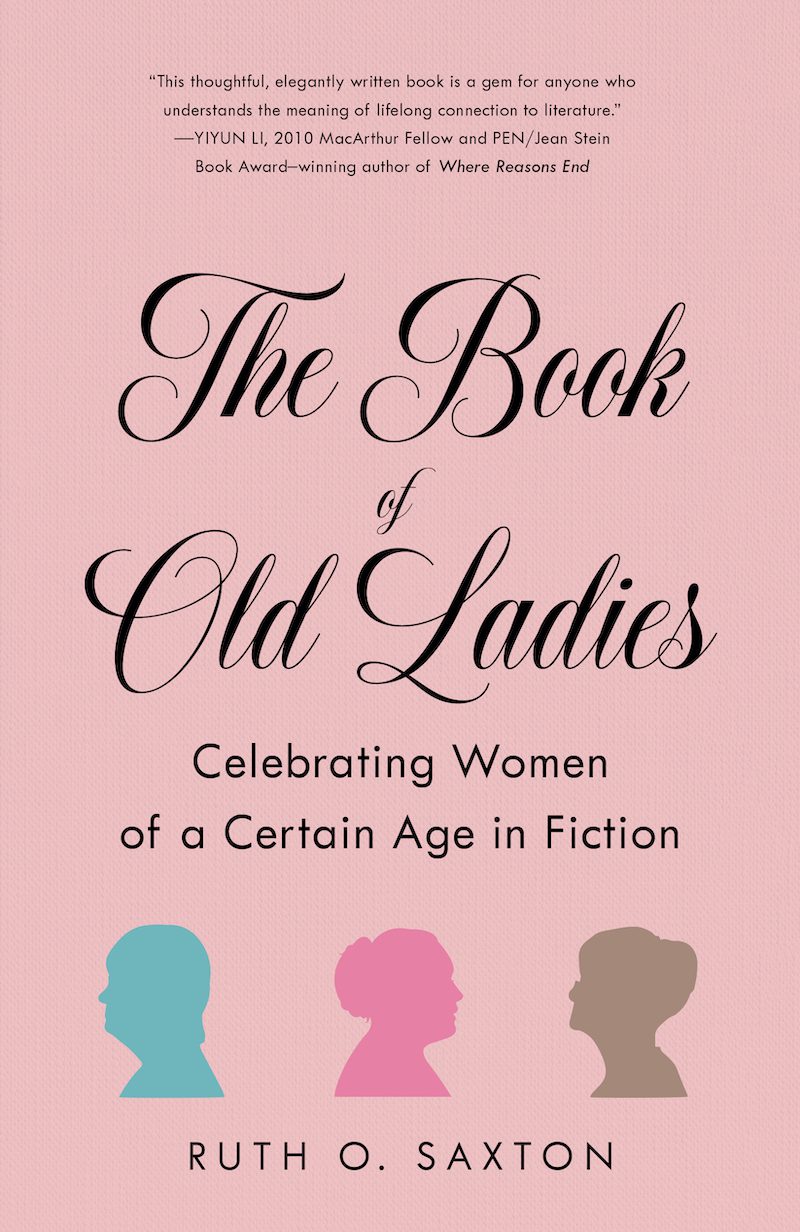
We read selected stories I feature in my forthcoming book, The Book of Old Ladies: Celebrating Women of a Certain Age in Fiction. We loved comparing our responses in animated discussions in person and on the course blog. Not only did students disagree among themselves, but seniors also noticed details the students had overlooked, and everyone brought lively insights to our conversations.

But, now the course has ended. Although I have been asked to continue the course, I can’t create that same magic again. Instead, I look forward to opening shared reading and discussion to a wider group, using this blog as a space to share my reflections and my interviews and other relevant content

I hope that eventually the blog provides a public space in which to move beyond The Book of Old Ladies and the spring course into conversations that introduce additional stories of women of a certain age–primarily, but not exclusively, in fiction. Some of those stories fall outside the structure of my book, others I have discovered since, and still others are only now being written. After years in which I could not find stories focused on the present lives of older women characters–not just their pasts–I am excited to introduce stories that move beyond what I have come to call “mini appearances of old women as secondary characters” or “death-bed bookends” to engaging stories that get inside the heads of old women, see the world through their eyes, and abandon tired old stereotypes.

I invite you to read along with me.

Please share your ideas and discoveries of Notable Old Ladies in Fiction and Beyond!