Senior Book Notes

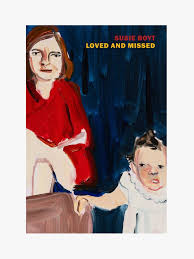
Love and Missed by Susie Boyt (2023)

This short novel, about 150 pages, tells the story of Ruth, who raises her granddaughter Lily, because Lily’s mother/Ruth’s daughter, Eleanor, is addicted to drugs. 

After someone dies of an overdose in Eleanor’s apartment, Ruth hands her daughter an envelope of cash and takes Lily home with her, and Lily, as she grows, is a delightful and loving, if overly self aware, well behaved child, and the relationship between her and Ruth is touching, powerful, and hopeful.

We all agreed we are glad we read Susan Boyt’s beautifully written novel. Several readers found it compelling and read it in one big gulp, while some of us found it so  intense  we had to read in small installments. This poignant novel is filled with so many insights that those of us who take notes or use post its, found phrases and words to savor on nearly every page–far too many for us to share.

We all admire Ruth, the mother of a daughter who at age thirteen begins to fulfill every parent’s fears–turning to drugs and addicts and avoiding and refusing all of Ruth’s attempts to connect, to please her, to alter her own behaviour in hopes of connecting. 

Boyt’s portrayal of Ruth and her estranged daughter is clear eyed, non-judgemental and heartbreaking. We soon realize that this story will not include an amazing recovery, rehab program, or fairy tale ending, but Ruth is able to rescue the already addicted emaciated baby Lily, and the story of her raising Lily is filled with love. Like Tillie Olsen’s stories, Boyt captures the sensual quality of a baby’s skin, the intoxicating pleasure of skin on skin, laughter and delight despite Ruth’s serious insecurity, and doubting herself.

One reader did a bit of research on the author learning she is one of Lucien Freud’s fourteen children and though not an analyst as our last author was, had trained as a bereavement counselor. 

We discussed the stereotypes of children of addicts, the notions that the body never forgets trauma, and we appreciated the book’s depiction of a healthy life ahead of Lily who is fifteen at the novel’s end. Lily might be described as a parentified child, aware from her reading and experience that her mother is lost to her, but the generosity of her grandmother and her grandmother’s community, despite economic and emotional hardship, leaves us hopeful for her future.

We talked about the title, taken from a tombstone and the many ways it can be parsed. How do you read the words? 

This is British writer Susie Boyt’s seventh novel, and the first to be published in the United States, and I hope its success means more of her books will be available here. I have a sense many of us will be looking for them. hungry for more of her insightful stories.

Senior Book Notes

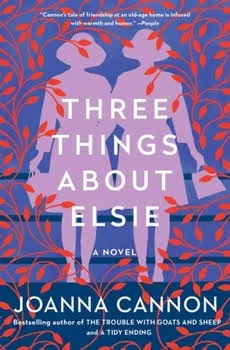
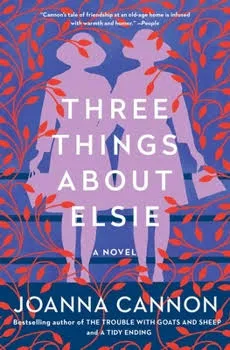
Three Things About Elsie  Joanna Cannon (2018)

There are three things you should know about Elsie. The first thing is that she’s my best friend. The second is that she always knows what to say to make me feel better. And the third thing…might take a bit more explaining.

Eighty-four-year-old Florence has fallen in her flat at Cherry Tree Home for the Elderly. As she waits to be rescued, she thinks about her friend Elsie and wonders if a terrible secret from their past is about to come to light. If the charming new resident is who he claims to be, why does he look exactly like a man who died sixty years ago?

Booklist describes the novel as

a tender and charismatic look into life in a nursing home. Cannon effortlessly captures the home’s slow routines, along with the ways that staff and residents coexist but often know little about each other . . .

When we met on Monday afternoon to discuss this novel, we all agreed we were glad we read it, but, perhaps predictably in a novel that focuses on the confusions of memory and truth, each of us had questions about the actual facts of the plot. 

We were not all sure what was actually “the truth” about Elsie, or about Florence, and we differed about certain “facts” in the novel about the past.

Spoilers ahead! Don’t Read if you don’t want to know what happens!

**************************************************

For example, we asked each another: When did it first become obvious to you that Elsie was not a resident of the home? When did Elsie die? Did she die in the fire Florence mistakenly believed she had caused? 

Several of us realized Elsie was not present in the retirement residence but did not realize she died in the fire. We all knew Elsie was Florence’s best friend, that they were very close friends, but not that Flo’s only love was Elsie, that after Elsie died, Florence never married or had children because she, Elsie, was her true love.

We talked about the retirement home, our own determination to avoid such places if possible, the patronizing tone of Miss Bissel and Miss Abrose toward the residents, the tendency to disbelieve those who are forgetful and tending toward dementia.

We agreed that Cannon’s characters–both residents and staff–were believable and well drawn. We praised her handling of the braided plots, Flo’s memories as well as the mystery plot. We appreciated the writing, and all of us had favorite lines, too many to record even with the help of post-its or underlining. 

The ending felt forced for some of us. Rodney’s arrest after so many years, the likelihood that he would end up at the same retirement home as Florence after so many decades. And that he would have access to her flat in his attempts to undermine her testimony about the past by accentuating her dementia. 

We speculated about the significance of the jet black amulet Flo notices beneath the baseboards from her fallen position on the floor.

We recognized the plot resembles what I label “deathbed bookends” in my book of old ladies, and yet we did not want to critique Cannon as we hadSusan  Minot for using this plot structure. After a bit, we realized Minot  had placed as the emotional center of her novel an unrequired sexual encounter from the protagonists’ past whereas Cannon provided a much fuller portrait of Flo’s current life and explored the aftermath of trauma.

Around the edges of our focus on the novel, we exchanged some of our own experiences: from visiting family members in such retirement homes, to differentiating between dementia and normal cognitive lapses, to experiences being patronized by younger people who call is by diminutive labels or refer to us in third person.

We liked Flo, and we wondered when she  began considering Elsie was present, when Elsie was part of herself. Was the third thing about Elsie that Elsie had died? Was it that she loved Elsie? What do you think?


Senior Book Notes

Want to read with us? Our Fall Schedule

A little background: Our book group’s origin was my final course before full retirement from Mills College in the Spring of 2020; it was a wonderful collaboration between a Mills English course “Coming to Age” and the Downtown Oakland Senior Center, in which students and seniors met together. The pandemic cut short our in-person discussions, and we turned to Zoom. After the semester ended, members of the senior center proposed we continue on Zoom on our own.

At first, I continued to select the books and was responsible for coming up with discussion prompts, but over time our process changed in wonderful ways. For example, at each meeting now, every member shows up prepared to call our attention to a particular passage or to consider a question or theme. We never know in advance where our discussions will lead, and it is wonderful to note the similarities and differences between what captures our attention and how we have responded to the passages, and texts, we have chosen.

We meet in sessions that generally run about eight meetings (or four per month). We meet twice a month over the session, and we all participate in selecting books. Before the end of each session, we all submit titles and brief descriptions of two or three books we have read and recommend. Two members, Patricia and Carole, helpfully type up the list and send a group email. Then, at the session’s final meeting, we vote to select eight books for the next. 

We focus primarily on fiction (novels or short story collections)by women  that feature an old woman as protagonist. Occasionally,  we select fiction by a man or we digress from fiction to a collection of essays. However, over the five years we have been meeting, most of our selections fall into our original category: fiction by women with older women protagonists.

If you’d like to read along,  our fall/winter session is August 11-November 24.

August 11:  Mrs. Quinn’s Rise to Fame by Olivia Ford. 2024; 384 pages.

August 25:  Three Things About Elsie by Joanna Cannon. 

2018; 372 pages.

September 8:  Erotic Stories of Punjabi Widows by Balli Kaur Jaswal. 2017; 304 pages.

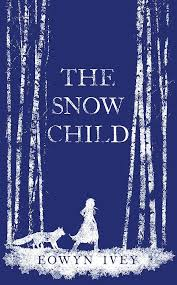
September 22: The Snow Child by Eowyn Ivey. 2012; 389 pages.

October 13:  Cat Brushing and Other Stories by Jane Campbell; 2022. 245 pages.

October 27: Loved and Missed by Susie Boyt; 2021. 208 pages.

November 10: An Unnecessary Woman by Rabith Almeddine; 2012; 291 pages.

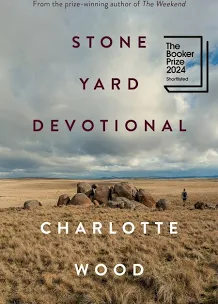
November 24: Stone Yard Devotional by Charlotte Wood. 2024; 320 pages.

Senior Book Chat

How to Read a Book: A Novel Monica wood

“The perfect pick to really light a fire under my book club, and yours….A reminder that goodness, and books, can still win in this world.” —New York Times Book Review

Monica Wood’s 2024 novel of fresh starts follows Violet, a 20-something woman fresh out of prison; Harriet, a retiree who leads a book club inside the women’s prison; and Frank, the retired machinist whose wife was killed in the hit-and-run for which Violet served time.

When I asked our book group what word they would associate with Wood’s novel, the first word was “forgiveness.” 

Reading about Harriet’s careful preparation for her weekly book group discussions in the women’s prison, I initially felt somewhat self-conscious about my comparatively less arduous preparation. Harriet prepared discussion questions and tried them out on her niece Sylvia. She even began each session with a short affirmation. 

But then I reassured myself that the members of the Downtown Oakland Senior Center book group are experienced readers. Our meetings follow a structure we have found useful: everyone in our group shows up prepared to call our attention to a particular passage, whether a favorite or one they find confusing or frustrating, and explains why we chose it. I am the convenor, but I do not control the conversation.  

What both groups have in common is the ability to escape into a book, to treat the characters as “fellow creatures” in Harriet’s words, and to respect one another and our differing opinions, in our case less from radically different life experiences, although certainly we have different paths, but more from our differing responses to the reading. It is interesting to consider, despite the general contours of our lives, how those responses are shaped by experience.

We appreciated Wood’s characters with their resolutely human gifts, kindnesses, and flaws. We appreciated that no characters are presented as completely evil or saintly, allowing us to experience them as fully realized.

  We liked the portrayal of second chances, not only for Violet but also for Harriet and Frank, both widowed, both capable of mature love with partners less judgemental  than their original spouses. Although Violet’s sister and Frank’s daughter both misjudge them, we have a sense they too may eventually be able to forgive. 

As in Beautiful Creature, we were taken with the non-human creatures as well, in this case African grey parrots. After her release from prison, Violet is hired as a lab assistant for  a research professor who studies  African grey parrot parrots, known for their amazing ability to mimic human speech and capable of memorizing hundreds of words. One of the delightful features of the novel is its description of the parrots, and Wood provides bibliographic links for readers who want to learn more about these fascinating birds.

The two novels are also similar in the way the authors tie up loose ends in the conclusions: both provide happy endings that, however improbable, are satisfying and just within the realm of the possible, avoiding the saccharine, thanks to realistic characterization. Violet’s coda at the end of the novel, with its account of her failed early marriage and the professor who takes advantage of her, reminds us not to give up on ourselves or others. Violet’s eventual contentenments–her much happier second marriage, three children, and grandchildren who all enjoyed Ollie–are pathways that seemed impossible in her early life.

I may investigate Wood’s other fiction when I yearn for kindness in ordinary fellow creatures and the possibility of second chances and forgiveness and love in our harried, chaotic and often callous world. 

Senior Book Chat

Dearborn by Ghassan Zeineddine  (2023)

  • Winner of the 2023 Khayrallah Book Prize
  • Finalist for the 2024 CLMP Firecracker Award for Debut Fiction
  • Shortlisted for the 2024 William Saroyan International Prize for Writing

Spanning several decades, Ghassan Zeineddine’s debut collection examines the diverse range and complexities of the Arab American community in Dearborn, Michigan. In ten excellent stories, Zeineddine explores themes of identity, generational conflicts, war trauma, migration, sexuality, queerness, home and belonging, and more.

The New York Times review beautifully articulates how I feel about these stories of immigrant experience:

Dearborn’s characters are split on what part of America is worth acquiring, what part must be resisted and how deep anyone is allowed to dream at all.

We had a good discussion, as always with this terrific group, and we agreed that these compelling stories drew us in, and we all wanted to know more.

However, I needed more help than usual from the group. My beloved dog scratched my eye, a particularly frustrating event given my already poor vision, so I could not manage taking notes on this collection, leading discussion, or taking notes on the group chat for this blog post. After the discussion, I asked people to send me notes and this blog is a group effort!

Patricia, to whom we are indebted for her recommendation of the book, opened the discussion; and several members sent me notes afterward. This week was even more than usual a clear demonstration of the value of community, an apt theme for this collection!

Several members talked about the way the author uses humor even when his stories deal with pain and regret. All of us were struck by the story of “Speedo” with its portrayal of humor and nostalgia as well as the charm of a modern “peddler” con man. Members reminded me how we appreciated, as a group, the “diversity of ethnic background, circumstances and personalities presented in the stories” and reminded me how we applauded the refreshing frankness about sexuality coupled with humor. We discussed the complex portrayals of marriages in the stories, which while located in specific local space, varied as in all spaces and groups between the good, the meh, and the abusive and ugly.

We discussed the stories’ references to the recent past, when Dearborn was a typical mostly white suburban town and barricaded itself against protests in Detroit in contrast to its now status as a vibrant community with a large immigrant population. The references to ICE are chillingly current.

The collection includes a variety of immigrant experiences and attitudes: from those who are able to return for a visit to their home country, those who cannot, and those who have no desire — either to return or in some cases, of the generation born in the states, to visit a country they have never seen. We hear of the longings of place: whether a past homeland or a dreamed future one, in Manhattan or Los Angeles.

The collection provides food for thought regarding traditional values and social relationships as they shift between nations and generations. We wondered about the effects — both toward less and more tolerance–as people navigated different value systems. We considered the ways the collection invites us to consider how success is valued in different cultural spaces. Does the desire for economic power motivate moving? Or is it created by being in the US? Or both?The collection presents such questions and issues without editorial judgment. Instead, the confident narrative lets us see how the characters are feeling.
Despite our varying connections with Lebanon, most of us knew little of the Lebanese community in Dearborn.

The two collections of short stories in our current series veer from our usual selections that focus on older female protagonists. Although we intend to return to that early focus, we all agree that these stories led to important insights both about immigrant communities, whether in Danticat’s portrayals of the Haitian diaspora or Zeineddine’s stories of the Lebanese diaspora, and about the ways in which cultural values shift, personalities abide, and community and tolerance and care are essential.

Senior Book Chat

The Friend by Sigrid Nunez 2019 Virago

.

When the narrator unexpectedly loses her lifelong best friend and mentor, she finds herself burdened with the large Great Dane he has left behind. Her own battle against grief is intensified by the mute suffering of the dog, and by the threat of eviction the dog harbors, as dogs are prohibited in her building.

Isolated from the rest of the world, increasingly obsessed with the dog”s care, and determined to read its mind and fathom its heart, the narrator comes dangerously close to unravelling, but, unsurprisingly perhaps, the novel is about the deep bounds of friendship its title suggests.

This book received a hugely positive critical response: it was listed as one of the New York Times Best books of the 21st century; won the 2018 National Book award, and was described generally in superlatives as a moving novel of grief and emotional depth, a delightful and delicious read.

And reader, upon first listen? I did not like it one bit.

When I noted my lack of enthusiasm, someone suggested that since the writing had been compared with that of one of my most favorite writers, Virginia Woolf, they were surprised I had such a grumpy reaction to it.

Both Woolf and Nunez write about death, about grief, and ultimately about writing itself. What appeals to me in Woolf’s characters, the artist Lily Briscoe and her plight, and not Nunez’s unnamed writer? Initially, I thought perhaps it was a matter of character development. Woolf’s Mrs. Ramsay and Lily interact, seem real somehow in a way Nunez’s narrator did not for me.  But is that really true? I am not sure. 

Perhaps it is a matter of prose style, or referentiality. I was a bit irritated at the abundance of literary allusions, even though I recognized most of them; however, some of the group enjoyed them. 

Perhaps, and here I am most sure, it was the masculinist space of the writing world she describes. The novel is fully engaged in the world of the professional writer and the profession of writing and teaching writing. I was both put off and bored by the male womanizing writing professor and the near fandom of his many students, particularly the women. This reminds me of a world I have been proximal to but have never been interested, let alone been fascinated by. I find the heated self conscious and self important literariness decidedly unerotic and intellectually dull. I cared only about  Apollo, the great Dane rather than any of the human characters that populated the novel.

In contrast, some members appreciated the friendly relation between the woman and her mentor, a friendship primarily based on intellectual conversation and shared intelligence. Despite, or perhaps because of, their different professional alignments, many found relatable truths in the novel’s portrayals of the friendship of a writer and her mentor. 

While I remain unmoved by the mentor relationship or the literary world the novel engages, with some consideration and attention to the groups’ insightful observations, I began to realize I had missed what most interested them, and what in retrospect I realize is the novel’s great strength: its meditations on grief, and particularly its moving engagement with grief after a suicide. Here are two quotes about grief that moved readers:

Nothing has changed. It’s still very simple. I miss him. I miss him every day. I miss him very much.

But how would it be if that feeling was gone?

I would not want that to happen.

I told the shrink: it would not make me happy at all not to miss him anymore.

What we miss – what we lose and what we mourn – isn’t it this that makes us who, deep down, we truly are. To say nothing of what we wanted in life but never got to have.

It is this thematic center of the novel that touched most of the group.

On the whole, members of the group are glad we read this novel, and because our experiences differed so much, our discussion was lively. 

Some members considered the entire account of Apollo a narrative conceit to make sense of her mentor’s suicide attempt and are convinced the reality is the embedded account of her visit to the man with the dachshund who survived the attempted suicide and spent time in a psychiatric hospital. 

This is a novel about writing and what it does; passages comment for example on the role of writing and memory:

You write a thing down because you’re hoping to get a hold on it. You write about experiences partly to understand what they mean, partly not to lose them to time. To oblivion. But there’s always the danger of the opposite happening. Losing the memory of the experience itself to the memory of writing about it. Like people whose memories of places they’ve traveled to are in fact only memories of the pictures they took there. In the end, writing and photography probably destroy more of the past than they ever preserve.

We talked about the many ways we use writing to process and record our experience and feelings, from private diaries and journals to memoirs or for accounts we have inherited or are creating for others.

The Friend touched each of us and led to lively discussion. I may even need to read it again.

Senior Book Chat

February 7 2025

Our winter 2025 season opened with a lively discussion of A Man Called Ove by Fredrick Backman (2012), a novel about which a number of members shared strongly held opinions. One reader pointed out her disappointment—-not only in the novel but more importantly, its divergence from the stated original focus of our book group: the book is neither written by a woman nor focused on an old woman. When I admitted that members had recommended two few on-topic books for t this season, she reminded me that she submitted a lengthy list. She had been unaware that we only consider books a member has read (we diverged from this “rule” when we agreed, prior to its publication, to read Elizabeth Strout’s Tell Me Everything because we so loved her other books. 

Our resultant disappointment in Strout’s most recent novel coupled with a discussion regarding our shifting from our founding goals resulted in our determination to dip into that lengthy list of on-topic books prior to our next round of selections.

To that end, please send me your suggestions of books you discover that are written by women and focus on older women! You can see our list to note what we have read previously.

Now back to A Man Called Ove,originally published in Sweden In 2012  and then translated by Henning Koch and published in English in 2013. The novel was on the New York Times best seller llist for 42 weeks. It has been adapted for two films, one in Swedish and a second in English.

The story follows a miserable, grumpy, elderly man living alone on a suburban street. Bitter over and still grieving the loss of his wife, Ove, alone and misanthropic, is disillusioned with the modern world and determines to end his life.  Described by his neighbors as “the bitter neighbor from hell” he eventually strikes up a friendship with a boisterous young family who moves in next door. His pregnant neighbor Parveneh, keeps interrupting his solitary life with her daily challenges. As you may anticipate,these multiple interruptions eventually re-connect Ove with the joys of human connection. The plot is obvious from the beginning, and members either  found it boring and derivative or appreciated the ease with which the plot  structured reading and the promise of a feel good ending..

The Kirkus review notes: “The book opens helpfully with the following characterizations about its protagonist: ‘Ove is fifty nine. He drives a Saab. He’s the kind of man who points at people he doesn’t like the look of, as if they were burglars  and his forefinger a policeman’s torch.’ What the book takes its time revealing is that this dyed-inn-the-wool curmudgeon has a heart of solid gold.

We generally sympathized with Ove and the hardships he had endured since childhood: the loss of both his parents, his loss of a job for refusing to be a snitch, the loss of his house to fire,his unborn child, and finally the loss of his beloved wife, Sonja whose upbeat personality balanced his curmudgeonly take on life. Some of us attributed his attitudes to grief; others said he was born into the wrong time, and we agreed that as readers “of a certain age,” we shared some of his complaints about the ineptitude of ordinary people to make their own household repairs, to mend a bicycle, or to back up a vehicle. We applauded his integrity and disagreed some about whether he had a heart of gold or just a sense of responsibility

The general tone of many reviews and the views of many of our group align with this feel good take on the novel. However, some members of our group wholeheartedly disagreed, frustrated with how the novel removes his own responsibility for his emotional disconnection, and provides little reason for his wife to have loved him except a tired adage that she saw something underneath his surface lack of empathy or kindness.  The novel also leverages the stereotype of the repressed, isolated Swede enlivened by the warm, open woman of color and her “chaotic” energy. 

The discussion was lively, and we all agreed that in this exhausting moment, the sort of “gentle ease” of the novel made it an easy read. We agreed that we will continue to look for books by women that focus on “old ladies” as we had decided to do five years ago, when the group began.

Senior Book Chat December 2024

Remarkably Bright Creatures by Shelby Van Pelt (2022)

Shelby Van Pelt was inspired to write this novel after viewing the underwater documentary My Octopus Teacher.  The novel focuses on the friendship between an octopus and a seventy year old widow whose eighteen year old son has mysteriously disappeared while on a boat trip decades before. After her husband’s death, Tova takes up night shifts mopping floors and tidying up at the Sowell Bay Aquarium where she becomes acquainted with Marcellus – a curmudgeonly giant Pacific octopus living at the aquarium. The book begins with narration by the octopus, named Marcellus McSquiddles—much to his chagrin, for he is not a squid.  Marcellus complains about his captivity as he approaches the end of his lifespan, and he introduces us to the aquarium and the night shift cleaning woman, Tova.

Like the readers who made the novel a bestseller, our group praised the novel as heartfelt and uplifting. The deft shifting first person narration made us really care about its characters . We appreciated its somewhat improbable but hopeful ending that, in the way of a Victorian novel, ties up all the loose ends. Readers in our group lightly criticized the somewhat ageist stereotypical depiction of Tova who lacks the technical skill we all have as seniors who meet over zoom and are deft with cell phones, computers, and ipads. We cringed a bit at the title of her group of friends, “the knit wits” even though it was based on their initial formation as a knitting group.

 That said, we all agreed we loved the novel anyway. Our favorite character was Marcellus, and the friendship we most admired was that between Tova and Marcellus rather than her group of slightly zany friends. Some of us share Tova’s Scandinavian stoicism, social reticence, and need to be busy, and we admitted that despite our technological skills, we often identified with her. We wondered at first why she took the laborious night job, but then an insightful reader of Scandinavian heritage reminded us of Tova’s desire for privacy and avoidance of gossip, unlike the gossipy owner of  the convenience store, Ethan, whose penchant for news contributes to the plot as much as his fondness for Tova.

I highly recommend this enchanting novel. You will never again see octopus as you do prior to meeting Marcellus. In fact, one of our members admitted she has replaced her original dread of octopuses with a new fascination for their brightness.

Senior Book Chat

The Heaviness of Things That Float (2016)

Jennifer Manuel

This book was difficult to find. We could not find copies in local libraries, but group members managed to obtain copies nevertheless as Carole’s note describes, in a brief anecdote that reminds me of the connections we make by reading together, connections that Bernadette, the protagonist of this novel, longs for:

“Linda and I live just a few minutes’ walk from each other and we’ve shared books for our group before. Usually, I’d finish and pass the book on to Linda, but this time we had a more elaborate arrangement. I found that I had no time to read during the day, so Linda had the book during the day and I had it overnight, since I seem to have quite a bit of awake time during the night these days. Mostly, we left the book for each other, inside my front gate or at Linda’s front door. Sometimes we met up for the exchange. It was fun to check in about where we were in the book and what we thought about what was going on. “

I was unable to access the book in an audio version; I had ordered a copy from a local bookstore, hoping I might be able to read parts with my magnifier, but it had not arrived by the time we met. So my contribution was simply a quote from one of the novel’s reviews I was able to access online. I quoted Carrie Breck’s Blog to open the discussion: “A truly conscientious writer brings first-hand experience, research, and timeless understanding, to a relevant issue.  For this reason Jennifer Manuel’s 2016 debut novel, The Heaviness of Things That Float is well worth talking about.” 

And talk we did, in a rich discussion led by Diane Anderson, who first suggested this book that touches on so many important topics. Diane writes:

There are 4 main themes in the book, as seen through the characters. They are starting over, loss, belonging, and the depiction of the indigenous community. The main character, Bernadette, has worked for 40 years as a nurse and is about to experience the loss of her job and identity: ‘Nobody could wholly know the heart of another, no matter which side of the unbalanced world we live in’ (284).  Bernadette longed to belong to the First Nation community, but the Tawakin people still considered her an outsider.  Her only sibling, her sister has recently died and left her a home on the mainland. She has rejected her former lover, Frank as a partner and has lost Chase Charlie, Frank’s biological child whom she loved. The author insists on people’s dignity and humanity in the face of unflinching sorrows (alcoholism, abuse, poverty, suicide).

The novel contains beautiful prose, describing the reservation as a community  where stories are

like organisms all their own, life upon life, the way moss grows around poplar trunks and barnacles atop crab shells, the way golden chanterelles spring from hemlock needles. They spread in the cove with the kelp and the eelgrass, and in the rainforest with the lichen, the cedars, the swordferns. They pelt down inside raindrops, erode thick slabs of driftwood, puddle the old logging road that these days led to nowhere.

I am sorry I could not read all of this evocative novel, but am lucky to have been introduced to it so well by this group of excellent readers. The novel reminds us that there are many sorts of community, and how important attentive belonging is.