Senior Book Notes

Want to read with us? Our Fall Schedule

A little background: Our book group’s origin was my final course before full retirement from Mills College in the Spring of 2020; it was a wonderful collaboration between a Mills English course “Coming to Age” and the Downtown Oakland Senior Center, in which students and seniors met together. The pandemic cut short our in-person discussions, and we turned to Zoom. After the semester ended, members of the senior center proposed we continue on Zoom on our own.

At first, I continued to select the books and was responsible for coming up with discussion prompts, but over time our process changed in wonderful ways. For example, at each meeting now, every member shows up prepared to call our attention to a particular passage or to consider a question or theme. We never know in advance where our discussions will lead, and it is wonderful to note the similarities and differences between what captures our attention and how we have responded to the passages, and texts, we have chosen.

We meet in sessions that generally run about eight meetings (or four per month). We meet twice a month over the session, and we all participate in selecting books. Before the end of each session, we all submit titles and brief descriptions of two or three books we have read and recommend. Two members, Patricia and Carole, helpfully type up the list and send a group email. Then, at the session’s final meeting, we vote to select eight books for the next. 

We focus primarily on fiction (novels or short story collections)by women  that feature an old woman as protagonist. Occasionally,  we select fiction by a man or we digress from fiction to a collection of essays. However, over the five years we have been meeting, most of our selections fall into our original category: fiction by women with older women protagonists.

If you’d like to read along,  our fall/winter session is August 11-November 24.

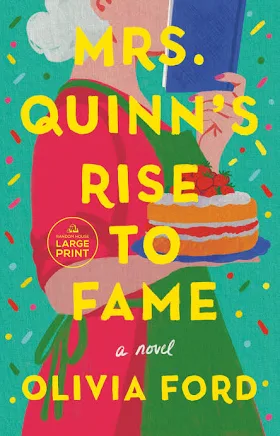
August 11:  Mrs. Quinn’s Rise to Fame by Olivia Ford. 2024; 384 pages.

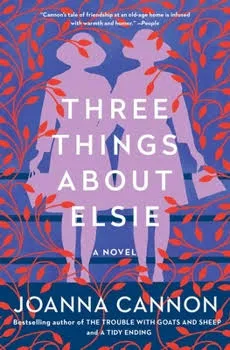
August 25:  Three Things About Elsie by Joanna Cannon. 

2018; 372 pages.

September 8:  Erotic Stories of Punjabi Widows by Balli Kaur Jaswal. 2017; 304 pages.

September 22: The Snow Child by Eowyn Ivey. 2012; 389 pages.

October 13:  Cat Brushing and Other Stories by Jane Campbell; 2022. 245 pages.

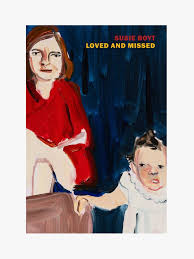
October 27: Loved and Missed by Susie Boyt; 2021. 208 pages.

November 10: An Unnecessary Woman by Rabith Almeddine; 2012; 291 pages.

November 24: Stone Yard Devotional by Charlotte Wood. 2024; 320 pages.

Senior Book Chat

Sipsworth by Simon Van Booy (2024)

Following the loss of her husband and son, 83 year old Helen Cartwright returns to the village of her childhood after living abroad for six decades. Her only wish is to die quickly and without fuss. She retreats into her home on Westminster Crescent, becoming a creature of routine and habit: “Each day was an impersonation of the one before with only a slight shuffle–as though even for death there is a queue.”

Then, one cold winter night, a chance encounter with a mouse sets Helen on a surprising journey. Over the course of two weeks in a small English town, this reclusive widow discovers an unexpected reason to live.

A Southern Review of Books reviewer notes that “Booy depicts aging and atrophy, loneliness and invisibility, with compassion,” and we largely agreed. Our responses to the book were mostly positive, from simply loving it to enjoying its fairytale qualities. The least positive was “I didn’t hate it” from a reader who prefers more character development and would have liked to know more of Helen’s inner life. 

A  reader in the group pointed out the effects of the author’s portrayal in minute detail of the repetition in Helen’s day, including the order of TV shows, the blurring of news from which she feels disconnected. We brought in many of our own observations about the invisibility of the elderly,  the difficulty of making new friends late in life, and the value of community.

It is no longer Helen’s world to think about. And in her mind it is the same news over and over again, with the only difference being that people think they’re hearing it for the first time. When there is a string of robberies in the village, Helen thinks, “But what does she have to steal? This is a place where everything of value has already been taken.”

We were surprised when we learned Helen had been a famous cardiologist in Australia, and we wondered what prompted her to return to her birthplace after so many decades. We wondered if she had friends, and noting Helen’s remarks about Dr. Jamal’s kindness as so different from her own way with patients, we considered that she may have been as single minded and unkind as Dr. Swenson in State of Wonder.

I think we all found her relationship with the small mouse heart warming, regardless of its probability. We may have laughed a bit at her sudden conversion to vegetarianism, but we agreed on the need for relationships with other people and were happy to see her come out of her depressive isolation and desire to die.

Stories such as Sipsworth can transport us away from the quotidian dailiness of our lives, just as the mouse transports Helen, opening us to delight and hope beyond the chaos of the broken world.  Like the fairytales of our childhoods, such stories, however fantastic, can awaken us to the power of kindness and connection and care,

We were a bit amused that this series included three tales of elderly women and animals from the octopus of Brightness to the parrots of How to Read a Book to the small mouse of Sipsworth. Common to all three of these very different stories was a move, through a connection with the animal, from loneliness and loss to newfound community and possibility.

Senior Book Chat

State of Wonder by Ann Patchett

Ann Patchett’s sixth novel, State of Wonder (2011), tells the story of a pharmacologist, Dr. Marina Singh, who travels into the Amazonian jungle to spend time with the indigenous Lakashi people and search for information on her colleague who has been reported dead.

State of Wonder is heavy with literary parallels (to Henry James, to Greek myth), but its strongest literary links are to Heart of Darkness, Joseph Conrad’s 1899 novel (also the basis for the 1979 film, Apocalypse Now) which follows riverboat captain Marlow on his voyage through the African Congo at the height of brutal European colonialism, obsessed with meeting Kurtz, the trader who violently abuses his power. Patchett replaces Conrad’s cast of male characters with women. (Dr. Swenson is her book’s Kurtz and Dr. Marina Singh its Marlow).

Dr. Singh is a research scientist who does unremarkable research on cholesterol in Minnesota and is having an unremarkable affair with the company’s C.E.O. On the book’s second page, she learns that her research partner, Dr. Anders Eckman, has died of a fever in a remote part of Brazil.

The New York Times notes how “crystalline and exquisite” Patchett’s prose can be:


Marina suddenly grasps why people faced with sudden shock are often advised to sit down. “There was inside of her a very modest physical collapse, not a faint but a sort of folding, as if she were an extension ruler and her ankles and knees and hips were all being brought together at closer angles.”

I first read this novel on a family vacation soon after its publication. I read it at the urging of each of my daughters–who are separated in age by 15 years. By the second page, I was enthralled in the plot and the prose. Over a decade later and now dependent on audio books, I was delighted when our book group chose to read a novel which I thought I remembered completely. In listening, I became aware of just how much had slipped my memory, and I enjoyed revisiting Patchett’s glorious prose.

I really enjoyed the discussion of the novel with the book group, as each reader called attention to details that lingered in our minds. We raised questions, including whether or not Marina was pregnant when she reached home (Patchett in a UTube lecture at Duke University commented that the hint in the novel is Marina’s switch from craving the tree bark to leaving it behind when she left the Amazon as Lakashi women lose their craving for the bark when they become pregnant).

We discussed the conclusion’s inconclusiveness: wondering if Marina would continue working with Anders; deciding she would never tell him the child might be his; assuming the bland affair with Mr. Fox ended when he spoke of possibly losing two employees in the Amazon, revealing no differentiation between her and Anders.
We talked a bit about the young Bohemian couple whose job was to protect Dr. Swenson from the outside, particularly from the pharmaceutical company providing her funding.

While we were glad Dr. Swenson finally praised her former student, we judged her sharply for her lack of empathy and for her single minded focus on the Amazon research of her own menter, Dr. Rap.

Patchett has revealed in interviews that she wanted to write a novel with strong female characters that was not about romance or victimization. She wanted to portray a relationship between a student and her mentor and to leave her readers with unsolved questions about ethics and morality. 


Like the Times reviewer, we were, however,  in large part most taken not by the plot, or even these large questions, but by Patchett’s writing itself, which we found luminous and powerful. We agreed we were glad we read this novel, and we all preferred it to Tom Lake which we read last year.

Senior Book Chat

Edwidge Danticat Everything Inside (2019)

Set in locales from Miami and Port-au-Prince to a small unnamed country in the Caribbean and beyond, the short story collection Everything Inside, explores how people come to terms with death, both their loved ones’ and their own. We agreed with the publisher’s comment that the collection offers “vividly imagined stories about community, family, and love” 

Danticat is a two-time National Book Award finalist, MacArthur Genius fellow, Neustadt laureate, and winner of scores of other prestigious literary honors. NPR describes the book as “ a stunning collection that features some of the best writing of Danticat’s brilliant career.”

We had decided that each of our group members would choose one story on which to comment. When we met, we discovered that our choices were split mostly between two stories: “ Sunrise, Sunet” and “Seven Stories.” All of us commented that the story we chose was so heartbreaking that we almost did not return to read more, but, we all would return, compelled by Danticat’s beautiful prose, her precise descriptions, her memorable characters. 

We talked about our observations of how she created male characters striking for their gentleness. For example, in “Sunrise,Sunset” the elderly grandfather lovingly tried to protect his wife and hide her dementia from others and the young husband tried to understand his wife’s disinterest in their baby, though he had no understanding of what we recognized as post partum depression. We shared our experiences with the ravages of dementia on families, and we recalled a similar kindness in our own lives or in other literature; for example, in the Madonnas of Leningrad which some of us read in the group some years ago. 

Each character, no matter how flawed, was legible in some way that did not exclude them from care. We considered how Danticat’s portrayals are kind, even loving, and noted that, like Tillie Olsen’s portrayals of suffering characters, Danticat cares about her characters; none are villains or beyond compassion.I have often encountered the notion that reading fiction helps to create empathy. Whether or not that is true, we discussed how we felt that Danticat’s stories insist on our empathy not only for her specific characters but for our communities.

We were delighted to have a visitor join our discussion: Oakland librarian Nabilla Mohamed, who helps our members locate books, sometimes even having them delivered to the member’s local branch. Nabilia read Danticat’s stories and shared her insights about the experience of homelessness that haunts every person who has moved from a homeland to a new country, whether by choice or necessity. She shared about attempts to maintain the best of one’s homeland culture, the values, the foods and spoke of the experience of always feeling to some extent as an outsider in both places even when one has the means to return for visits. We all wanted her to join our group despite her young age, and assured her she would always be a welcome guest.

The LARB review comments of the collection that “This is existentialist fiction: everyone is exiled in their own suffering, we can’t fully know another’s pain although we can touch it briefly, and our full essence — everything inside — is not manifest until the moment of death.” While this failure of total knowledge is of course true, that “brief touching” is meaningful, and we were grateful for the ways Danticat’s collection both exemplified that meaning in prose and in our own personal experiences that her prose invited us to share.