The Things We Never Say by Elizabeth Strout

Elizabeth Strout’s The Things We Never Say (Random House, May 5, 2026, longlisted for the 2026 Booker Prize) follows Artie Dam, a fifty-seven-year-old high school history teacher in a coastal Massachusetts town, through the summer and fall of 2024. Outwardly Artie has all the makings of a good life, a thirty-year marriage, a house, a son he is proud of, a beloved career, a sailboat,  and inwardly he is desolate. The novel is at once a portrait of loneliness, a study of class and marriage, and a record of a country’s drift toward fascism.

(SPOILER ALERT: this post discusses the novel’s central secret.)

Our conversation began with an admission by several of us that we had read this most recent Elizabeth Strout novel early this summer, then forgotten the details, and had to read it a second time to prepare for our discussion. I suggested that perhaps our forgetfulness was because Strout captures our current political climate so well. But others quickly disagreed with me and began instead to discuss Artie. In retrospect, I wonder whether our forgetfulness may have been rooted in the sadness we felt as Artie, the outstanding teacher of the year, familiar to us, was gradually worn down, deeply depressed.

A chronological plot summary does not do justice to this seemingly simple story of a beloved high school history teacher, a man with a big heart and a love of the sea, who increasingly wonders whether there is such a thing as free will. Strout gives the reader a sense of what is coming for Artie, foretelling his future and then backing up to the present storyline. As a historian, he is acutely aware of his country’s increasing fascism. On the personal level, he is uncomfortable living in his wife’s inherited home on a private street among wealthy neighbors he considers snobs.

He frequently remembers his own parents with love and tenderness. An unforgettable scene in the novel — and a recurring image for Artie — is that of his sister Maria in the cellar of their basement apartment, eating confectioners’ sugar from a jar with a spoon, and his recognition of how hungry she was for sweetness in her life. He feels a tenderness for his mentally ill mother, and we see how that tenderness informs his relations with his most troubled students.

Artie is then confronted by the secrets of his wife, Evie, who lied to him about their son Rob’s paternity, and her relationship with one of their social group, Reginald, an intellectually pretentious man Artie deeply disliked and did not respect. Artie and Reginald’s wife Flossie had a warm but non-erotic friendship.

On his deathbed, Reginald sent a letter to Rob that reveals the affair and directs him to a lab for DNA proof of his paternity. Rob shares the information with Artie, and while their connection strengthens,  neither of them ever tell Evie who discovers the letter among Artie’s belongings after he dies.

We all loved Artie as a character, and most of our discussion focused on him: as a teacher, as a parent, as a friend. The novel is too intimate and too timely to be easily labeled with a list of topics, though it is certainly about class, about marriage, about parenting, and about the things that prevent people from really knowing one another, including secrets, a  theme we saw in the last book as well. 

One difference in this book is that the personal complications are aligned specifically with the disillusionment of a man who has lost his faith and trust both as an individual, in the institution of marriage, and the reality of what one presumes of one’s neighbors or community who he may know are flawed, but does not presume to be as brittle or selfish as they are. 

He is a historian whose keen awareness of the ways the country faces real destruction combines with this personal shock to fundamentally shake his core sense of identity. 

He is rescued from a sailing accident by a person whose political views are an anathema to him. It is these complications which have always existed and which Strout reveals in their current attenuated state, one that many of us recognize as we also often want to escape.

Midway through our discussion we were joined by a new member, who agreed that she loved the book and plans to come back because of our interesting book list, one co-created by all of us from books we recommended after first reading them.

Stay tuned for our next read: The One Hundred Years of Lenni and Margot by Marianne Cronin

The Museum of Failures (2023)

Our fall series began August 10 with a discussion of The Museum of Failures. Published reviews are mixed, but our group was unanimous in appreciating the novel. Everyone agreed that the plot is engaging and the characters compelling, and that the novel had us emotionally involved as well as intellectually interested.

Thrity Umrigar’s The Museum of Failures (Algonquin Books, September 26, 2023) follows Remy Wadia, a Parsi man who has built his adult life in America and returns to Bombay hoping to adopt a baby. What he finds instead is his estranged mother, Shirin, gravely ill in hospital, and a family secret that upends everything he believed about both his parents. The novel is at once a story of immigration, a portrait of a small and often overlooked religious community, and an argument for the necessity of telling the truth.

In an attempt to open discussion, I chided the group a bit for sneaking in a novel whose central protagonist is Remy, a young man in his thirties. Several members countered that Remy’s mother and father are also major characters — though we all agreed that Remy’s perspective dominates the novel.

We agreed that we learned a great deal about Parsi history and customs. Most of us knew far more about Hindu and Muslim faith than about Zoroastrianism when we began reading, and although this is not our first novel about immigration, it is the first told from the point of view of an upper-caste Indian family of wealth. Remy immigrated to America to get away from his mother, not to escape poverty, and he is the only member of his family or of his group of friends who does not stay in India.

Spoiler alert: the rest of this post discusses the novel’s central secret.

Our discussion focused primarily on Remy’s parents and on the crucial secret kept from him until his return visit, three years after his father’s death — a visit undertaken in pursuit of an international adoption rather than to see his estranged mother. The novel probes the many costs of withholding the truth, and yet it ends on a positive note. Remy discovers his mother seriously ill in hospital, develops a relationship with her, and learns the secret of his older brother, who was born physically and mentally disabled after the cord twisted around his neck before birth. That brother had been placed in a Catholic institution for such children, most of whom were orphans — placed there by Remy’s father, against the wishes of his mother. Under the arrangement his parents then made, Remy was allowed to adore his father and fear his mother without ever knowing their secret. By the time he discovers the truth, his brother has died, along with three other young boys, in a fire at the institution.

If the novel has a message for the reader, it is the importance of truth-telling, even when the truth seems to hold all kinds of risk. But the novel is about so much more: about family, about friendship, about the similarities and differences between India and America, and particularly between Bombay and the Midwest. Although the prose stumbles at times and can feel a little heavy-handed, we all agreed that the book is well written, and each of us had favorite passages that we shared in discussion.

The Cemetery of Untold Stories  

by Julia Alvarez (2024)

“Everybody is a walking library” Julia Alvarez

In Julia Alvarez’s most recent novel, The Cemetery of Untold Stories, her narrator, Alma Cruz, laments the many stories she has not been able to finish. Her mentor, a close friend and famous novelist, begs her to finish the incomplete story that has for years driven her to a form of madness; in attempts to better know her unwritten characters, she has traveled internationally, behaved erratically, and still been unable to move forward.

Over the course of the novel, Alma eventually comes to terms with her unfinished manuscripts, facing her mortality navigating the changes and losses of aging, and the shifts in the acts of imagination and ambition that have propelled her for over thirty years of publication, fame, and university teaching.

She decides simply to stop the arc of her present trajectory, not her life, but the life she has been leading and in which she has been struggling. She retires from her teaching position, rents out her home in Vermont, hires a former student to help box up all her manuscripts, and moves to the island she has always considered home: the Dominican Republic, the home from which her family moved when she and her three sisters were children.

Alma and her sister have inherited a dozen small parcels on the island which need to be divided amongst the four sisters. Alma, confusingly to all–readers and characters alike–chooses the parcel in what is considered the most unsavory neighborhood, adjacent to the city dump. 

Once Alma relocates to the island, the narrative, like the character herself, becomes clearer. We agreed the story becomes increasingly compelling when she has relocated and, in a fantastical turn, decides to create a cemetery on her land, a cemetery for her many boxes of untold stories. 

Like her readers, Alma’s neighbors in the barrio are bewildered by the concept of a cemetery for untold stories, rather than people or animals.

Eventually, Alma decides to move from her family’s vacation home and to have a small casita constructed in the cemetery. 

We enjoyed reading about Alma’s friendship with the artist Brava, who eventually creates a fitting marker and sculpture for each unwritten character, each burial plot, each plotted tale untold.

Once the stories are buried, the novel shifts into glowing magical realism. The buried manuscripts  transmit their stories, converse with each other and can be 

heard by local woman Filomena who lives just outside the cemetery and is eventually hired by Alma to help keep an eye on the place, clean the bird shit off the sculptures and communicate with the curious neighbors. She is able to overhear the conversations between the unwritten characters, and we eavesdrop with her.

I had to listen to the audible version a second time before I could separate the multiple stories, begin to figure out the web of characters, and their many secrets and subtle connections. Central to the novel is its parallel sets of sisters: the four sisters of Alma’s lived experience, Filomena and her estranged sister, and sisters in the untold stories.Alma’s family’s lineage, and that of the “real” characters in the novel as well as the fictional characters, some of which are historically based, include details of patriarchal violence, sexism, crimes of passion, murder, repressed sexuality, adultery, and so forth.

When I asked our group to sum up the novel’s topic in a few words and offered “storytelling” as  my  own word, the responses included:   “unfinished business; immigrant experience in New York; who owns a story?” 

We welcomed the many phrases in Spanish and the sense of an expanded reading audience beyond a monolingual audience. We wondered aloud if Alvarez, like Alma had fictionalized her family members, told their secrets and angered them in the telling.Several group members intend to read her earlier fiction or to do a bit of research on her life. 

We agreed we are glad we chose to read this novel, and we then segued to conversations about our own collections–things kept or unfinished: things, our books, the downsizing of our parents’ belongings as well as our own.  

Perhaps because we have chosen to focus on stories of older women for over more than five years now, we are noticing patterns that reappear among stories we initially considered had nothing in common. Across a variety of tones, and formal styles, so many of our books navigate how we, as we age, navigate losses, in the present and in the recent and long past, grief, friendship, family relationships, secrets, and how we stay connected to the power of the imagination, redemption, and connection. Reading these books together connects not only the books, and their characters, but like Alma’s stories, our own. 

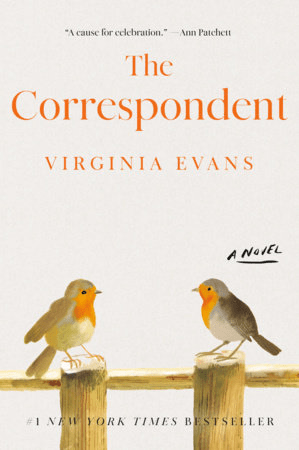
The Correspondent

Virginia Evans (2025)

This debut epistolary novel reminds us how important letters are. 

Sybil Stone Van Antwerp lives alone in retirement from an impressive career in law. Kind and reserved, she misses the clarity and order of the law.

Her life is not empty, and yet she is alone, tending to her garden, and involved with a variety of family members, local organizations, and old friends through her meticulous letter writing practice.

 We learn that she fell apart after the death of her son Gilbert, age 8, in a diving accident while in her care. She was focused on a legal document from work and not paying attention when he dived into the river and broke his neck on its rocky bottom. Her marriage to Dan could not survive; both grieve, and he returned to his homeland, Brussels, taking their two younger children, 4 year old Fiona and 1 year old Bruce with him.

The novel gradually reveals the long term effects of Gilbert’s death.

She buried herself in her work while still reeling with grief and made a fatal judgement in her legal role, one driven by her rage and sorrow which causes great harm. 

We all agreed that we are glad we read this novel. We had not known when we chose the novels or their order that, as in our previous book Hamnet, this novel dives deep into the narration of a grief stricken mother after the death of her son. 

We talked about the competing pull of profession and family life, and how carefully and subtly the novel captures Sybil’s sense, as an adoptee, of being on the outside, even as her adoptive family is wonderful. In one plot strand, she navigates the gift of a DNA test, and we talked about modern ways of tracing one’s identity by sending off a saliva sample. 

We enjoyed Sybil’s eventual discovery of a sister and extended family in Scotland, her tender friendship with widowed neighbor Theordore, and the realism of the break with Rosalie and then the renewal of their friendship. 

We really appreciated the ways in which Sybill’s letters were so different in tone, tailored toward each of the recipients with precision and care. She can be formal and curt in one letter and delightful and encouraging in another. Her warm connection with her fellow adoptee, her brother, her careful intelligent writing to Joan Didion, her insistent refusals of garden club and university decisions she deems unwise or unfair, and her humane interactions with corporate workers, all build a real sense of a fully developed complex character.

We did wonder why the author included the loud flirtatious retired lawyer from Houston, speculated that he made her laugh and perhaps helped to open her up to friendship with Theodore, as well as showing us that she is of romantic interest not just to Theodore, and we appreciated this vision of possibility and flirtation in later life. 

Her relationship with a colleague’s young son Harry is a particularly compelling epistolary connection, as we see her deep care, her mothering of this young troubled boy with respect and real interest in his individuality, and so glimpse a version of her that her adult children do not see.

Her impending blindness is what initially drew me into the book, and then I was so caught up in her web of characters and the other plot points that I lost track of that until near the end. Her vision seemed to deteriorate much more rapidly than my own, but her loss of independence and need to rely on others for driving and for companionship in travel rang true.

We appreciated the ways in which the novel is redemptive without veering into fairytale happily ever after. I appreciated the novel’s quick, silent death, alone at her writing desk, and the ways in which her unsent letters are discovered and help her family and close friends to understand why she did not attend Dan’s funeral and to grasp the extent of the devastation and intensity of her loss of Gilbert.

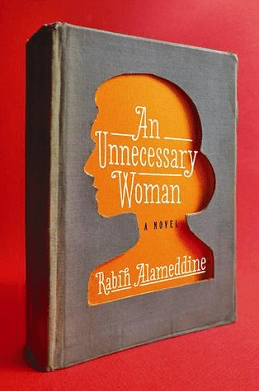
An Unnecessary Woman by Rabih Alameddine (2014)

This 2014 novel was nominated for the National Book Award for Fiction. 

I am grateful for the members’ insights which I share below, as I was navigating family health crises for this discussion.

From Patricia:

In An Unnecessary Woman, Rabih Alameddine weaves an engaging tale about an unlikely survivor. Despite a dismal childhood, a dreadful arranged marriage, and the misfortune of living in war torn Beirut, Aaliya survives by immersing herself in a world of books – first by reading constantly in the small bookstore she managed and later by translating into Arabic many long and difficult works. Although this elderly Beiruti woman observes: “Most of the books published these days consist of a series of whines followed by an epiphany,” the tale of her life ends with an epiphany of sorts. When a flood threatens to destroy a mountain of boxes containing her many translations, she discovers that she can survive this catastrophe only with the help of several elderly women in her apartment building. Because of the unlikely and untested bond between these women and Aaliya, some of her translations may survive, and she begins to believe she is not an unseen or unnecessary woman.

From Liz:

I enjoyed the story and the characters. I also liked learning about the Lebanese civil war. I found the book sad but hopeful at the end. I disliked the massive number of literary quotes in the book – they became overwhelming for me and took away from the enjoyment of the story.

From Diane:

I recommended this book and really enjoyed it. The author is Lebanese and I learned about the Civil War which deeply affected the protagonist, Aaliya’s life. I found the writing full of wit and also sadness. Many of the references to books and music were not that interesting to me however and I found myself skipping lots of pages. Aaliya is an introvert who isolates herself and prefers the company of books and music, instead of people in her life. 

We appreciated Diane’s suggestion of this nuanced, complex novel.

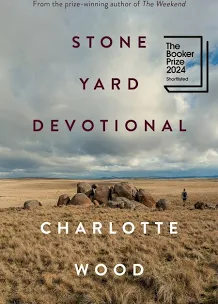
2025 Challenges/Stone Yard Devotional by Charlotte Wood

It has been a very plot-driven end to the year 2025 at every level, local, national, international. Like the protagonist of Charlotte Wood’s 2023 novel, we have all been buffeted by the cruelty of what Wood calls, “the broken world,” even as we have cheered on individuals and communities who insist on resistance and hope.

In the midst of the chaos, my husband and I both had medical emergencies (we are mending and home now), and I was grateful for our group, both because the picked up the pieces and kept things going (including taking the leads for two books in discussions and the blogs I am finally posting, and for the continuity and community of our shared reading and conversation experience, more needed than ever.

Health issues are present at any age, but certainly shape the reality of aging for most of us, and to be supported with medical care, and a strong community is a gift I wish for all of us in this, and every, stage of life. I am delighted to share group member’s smart comments on the final books of our last season.

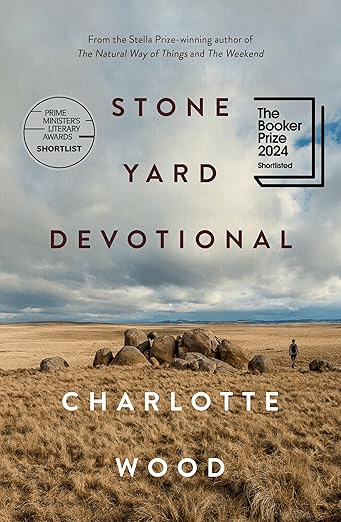
Stone Yard Devotional by Charlotte Wood

Crushed by the seeming hopelessness of the broken world, the narrator of this novel, who works in species conservation, despairs at the ways we are destroying the planet, one another, and ourselves. 

She leaves her life in Sydney, including her marriage, iand checks into the retreat house of an enclosed convent on the Monaro Plains in New South Wales. 

As the Guardian reviewer notes,
“retreat she certainly does. For a while she just lies on the floor.”

Eventually, she participates in the life of the convent – joining the other women doing daily tasks of preparing food, cleaning, turning up to mass and the hours of office. There’s no epiphany, no  conversion narrative, just a quiet story of people tending to things. 

Liz L. writes:

I enjoyed this book.  It felt very meditative and stream of consciousness but had enough character development and emotional content to keep me interested and reading.

I was fascinated that the narrator was unnamed.  I didn’t even realize it until I was thinking about the book for group discussion! I loved the relationships that the narrator had with the other women in the retreat center and with Sister Helen Parry and with her mother.  I loved the stream of thoughts and remembrances and ideas that seemed to flow from the narrator in a constant river.  It felt very real and real life – like something I do at times when I remember the past.

From Patricia:

In an interview for the Booker Prize, Charlotte Wood, the author of Stone Yard Devotional,said,

“I wanted to master what Saul Bellow called ‘stillness in the midst of chaos.’

I think Wood accomplished this masterfully. The major voice in this novel is an unnamed woman. We learn that she has left job as a manager in an environmental non-profit. The narrator very briefly also mentions a husband she is leaving, but the novel is not larded with the details of her adult life before she visits the abbey on the Monaro plains in New South Wales. After a few short visits to the abbey, she returns and simply stays. We follow her as she shares the life of this community

of cloistered sisters. The silence and simplicity of her life in the abbey allow her to examine memories of her childhood. As she, with the other sisters, confronts a plague of mice and the tensions surrounding the burial of Sister Jenny, a nun who left the abbey for missionary work in Thailand, the narrator slowly finds a measure of peace with herself.

Annette writes: 

Like others in our group, I read this novel in several sessions because there was no plot to carry me forward.  Shortly before our Zoom meeting I realized I had had about ¼ in of pages left to read, right where the unnamed narrator and Helen Parry, the activist nun, drive around together stopping for a moment at various places where significant things happened in their youth.

My inability to sense where the novel was going relates to something the author said, as reported in LitHub. “There’s a lot of teaching and admonishing and explaining that goes on in contemporary fiction and I was sick of it… I have this setting of silence and stasis which is not good for a novel… I’m kind of writing a still life painting.”  Her friend Jude Rae, a painter of still-lifes, gave her advice for achieving an appealing movement. 

Toward the end it seems that the narrator and Helen express their feelings about their mothers.  The narrator has become more aware and respectful of her mother’s activities to better the world and also sees them a failure.  Both the narrator and her mother tried to do good (through environmentalism and helping refugees, among other things) but they tended at times to distance themselves from addressing local troubles.  The narrator’s mother had never visited Helen’s mother.  The narrator had joined in cruelty to Helen at school, and in adulthood chose to imagine that the man by the side of the road who disappeared down a covered drain was a worker and everything was ok.  

In interviews, Charlotte Wood talks about bush fires, COVID, the mouse plague and floods—all evidence of imbalance.  As a middle-class white woman who wants a moral way to proceed in the world, perhaps she lays out some considerations in this novel.  

Local vs worldwide activism; kindness vs effective disruption (privileged generosity vs dangerous activity); responsibility vs despair; direct activism vs talking/convincing others; and exploration of retreating into silence and routine to confront oneself, to do the least harm, or to do nothing. 

The stark setting in New South Wales, beautiful to some and terrifying to others, was described in a visual way (like a still-life?) that provokes emotion and thought:  the old cemetery with trees and the newer part a lawn with orderly identical headstones and faded plastic flowers here and there; the boulders in the larger landscape; the weather in which scenes in the novel take place. 

Local place names in such variety would provide orientation to inhabitants of a nearly undifferentiated expanse; but in this novel they seem enigmatic, part of the mood. 

Senior Book Notes

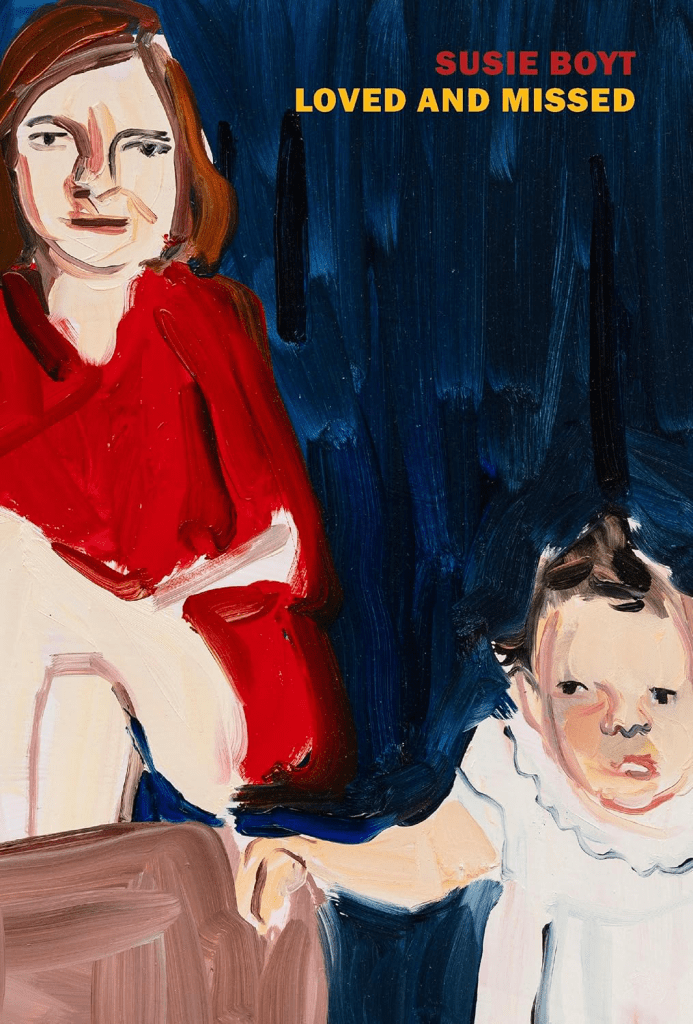
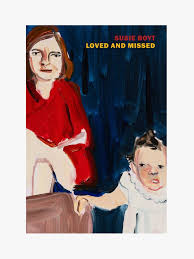
Love and Missed by Susie Boyt (2023)

This short novel, about 150 pages, tells the story of Ruth, who raises her granddaughter Lily, because Lily’s mother/Ruth’s daughter, Eleanor, is addicted to drugs. 

After someone dies of an overdose in Eleanor’s apartment, Ruth hands her daughter an envelope of cash and takes Lily home with her, and Lily, as she grows, is a delightful and loving, if overly self aware, well behaved child, and the relationship between her and Ruth is touching, powerful, and hopeful.

We all agreed we are glad we read Susan Boyt’s beautifully written novel. Several readers found it compelling and read it in one big gulp, while some of us found it so  intense  we had to read in small installments. This poignant novel is filled with so many insights that those of us who take notes or use post its, found phrases and words to savor on nearly every page–far too many for us to share.

We all admire Ruth, the mother of a daughter who at age thirteen begins to fulfill every parent’s fears–turning to drugs and addicts and avoiding and refusing all of Ruth’s attempts to connect, to please her, to alter her own behaviour in hopes of connecting. 

Boyt’s portrayal of Ruth and her estranged daughter is clear eyed, non-judgemental and heartbreaking. We soon realize that this story will not include an amazing recovery, rehab program, or fairy tale ending, but Ruth is able to rescue the already addicted emaciated baby Lily, and the story of her raising Lily is filled with love. Like Tillie Olsen’s stories, Boyt captures the sensual quality of a baby’s skin, the intoxicating pleasure of skin on skin, laughter and delight despite Ruth’s serious insecurity, and doubting herself.

One reader did a bit of research on the author learning she is one of Lucien Freud’s fourteen children and though not an analyst as our last author was, had trained as a bereavement counselor. 

We discussed the stereotypes of children of addicts, the notions that the body never forgets trauma, and we appreciated the book’s depiction of a healthy life ahead of Lily who is fifteen at the novel’s end. Lily might be described as a parentified child, aware from her reading and experience that her mother is lost to her, but the generosity of her grandmother and her grandmother’s community, despite economic and emotional hardship, leaves us hopeful for her future.

We talked about the title, taken from a tombstone and the many ways it can be parsed. How do you read the words? 

This is British writer Susie Boyt’s seventh novel, and the first to be published in the United States, and I hope its success means more of her books will be available here. I have a sense many of us will be looking for them. hungry for more of her insightful stories.

Senior Book Notes

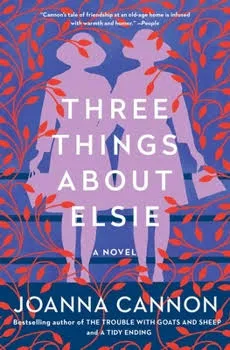
Three Things About Elsie  Joanna Cannon (2018)

There are three things you should know about Elsie. The first thing is that she’s my best friend. The second is that she always knows what to say to make me feel better. And the third thing…might take a bit more explaining.

Eighty-four-year-old Florence has fallen in her flat at Cherry Tree Home for the Elderly. As she waits to be rescued, she thinks about her friend Elsie and wonders if a terrible secret from their past is about to come to light. If the charming new resident is who he claims to be, why does he look exactly like a man who died sixty years ago?

Booklist describes the novel as

a tender and charismatic look into life in a nursing home. Cannon effortlessly captures the home’s slow routines, along with the ways that staff and residents coexist but often know little about each other . . .

When we met on Monday afternoon to discuss this novel, we all agreed we were glad we read it, but, perhaps predictably in a novel that focuses on the confusions of memory and truth, each of us had questions about the actual facts of the plot. 

We were not all sure what was actually “the truth” about Elsie, or about Florence, and we differed about certain “facts” in the novel about the past.

Spoilers ahead! Don’t Read if you don’t want to know what happens!

**************************************************

For example, we asked each another: When did it first become obvious to you that Elsie was not a resident of the home? When did Elsie die? Did she die in the fire Florence mistakenly believed she had caused? 

Several of us realized Elsie was not present in the retirement residence but did not realize she died in the fire. We all knew Elsie was Florence’s best friend, that they were very close friends, but not that Flo’s only love was Elsie, that after Elsie died, Florence never married or had children because she, Elsie, was her true love.

We talked about the retirement home, our own determination to avoid such places if possible, the patronizing tone of Miss Bissel and Miss Abrose toward the residents, the tendency to disbelieve those who are forgetful and tending toward dementia.

We agreed that Cannon’s characters–both residents and staff–were believable and well drawn. We praised her handling of the braided plots, Flo’s memories as well as the mystery plot. We appreciated the writing, and all of us had favorite lines, too many to record even with the help of post-its or underlining. 

The ending felt forced for some of us. Rodney’s arrest after so many years, the likelihood that he would end up at the same retirement home as Florence after so many decades. And that he would have access to her flat in his attempts to undermine her testimony about the past by accentuating her dementia. 

We speculated about the significance of the jet black amulet Flo notices beneath the baseboards from her fallen position on the floor.

We recognized the plot resembles what I label “deathbed bookends” in my book of old ladies, and yet we did not want to critique Cannon as we hadSusan  Minot for using this plot structure. After a bit, we realized Minot  had placed as the emotional center of her novel an unrequired sexual encounter from the protagonists’ past whereas Cannon provided a much fuller portrait of Flo’s current life and explored the aftermath of trauma.

Around the edges of our focus on the novel, we exchanged some of our own experiences: from visiting family members in such retirement homes, to differentiating between dementia and normal cognitive lapses, to experiences being patronized by younger people who call is by diminutive labels or refer to us in third person.

We liked Flo, and we wondered when she  began considering Elsie was present, when Elsie was part of herself. Was the third thing about Elsie that Elsie had died? Was it that she loved Elsie? What do you think?


Senior Book Notes

Want to read with us? Our Fall Schedule

A little background: Our book group’s origin was my final course before full retirement from Mills College in the Spring of 2020; it was a wonderful collaboration between a Mills English course “Coming to Age” and the Downtown Oakland Senior Center, in which students and seniors met together. The pandemic cut short our in-person discussions, and we turned to Zoom. After the semester ended, members of the senior center proposed we continue on Zoom on our own.

At first, I continued to select the books and was responsible for coming up with discussion prompts, but over time our process changed in wonderful ways. For example, at each meeting now, every member shows up prepared to call our attention to a particular passage or to consider a question or theme. We never know in advance where our discussions will lead, and it is wonderful to note the similarities and differences between what captures our attention and how we have responded to the passages, and texts, we have chosen.

We meet in sessions that generally run about eight meetings (or four per month). We meet twice a month over the session, and we all participate in selecting books. Before the end of each session, we all submit titles and brief descriptions of two or three books we have read and recommend. Two members, Patricia and Carole, helpfully type up the list and send a group email. Then, at the session’s final meeting, we vote to select eight books for the next. 

We focus primarily on fiction (novels or short story collections)by women  that feature an old woman as protagonist. Occasionally,  we select fiction by a man or we digress from fiction to a collection of essays. However, over the five years we have been meeting, most of our selections fall into our original category: fiction by women with older women protagonists.

If you’d like to read along,  our fall/winter session is August 11-November 24.

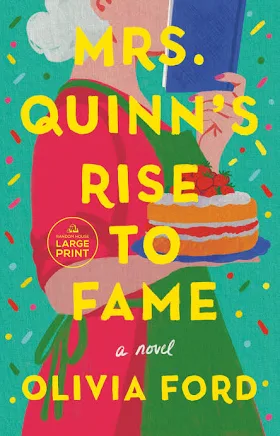
August 11:  Mrs. Quinn’s Rise to Fame by Olivia Ford. 2024; 384 pages.

August 25:  Three Things About Elsie by Joanna Cannon. 

2018; 372 pages.

September 8:  Erotic Stories of Punjabi Widows by Balli Kaur Jaswal. 2017; 304 pages.

September 22: The Snow Child by Eowyn Ivey. 2012; 389 pages.

October 13:  Cat Brushing and Other Stories by Jane Campbell; 2022. 245 pages.

October 27: Loved and Missed by Susie Boyt; 2021. 208 pages.

November 10: An Unnecessary Woman by Rabith Almeddine; 2012; 291 pages.

November 24: Stone Yard Devotional by Charlotte Wood. 2024; 320 pages.

Senior Book Chat

How to Read a Book: A Novel Monica wood

“The perfect pick to really light a fire under my book club, and yours….A reminder that goodness, and books, can still win in this world.” —New York Times Book Review

Monica Wood’s 2024 novel of fresh starts follows Violet, a 20-something woman fresh out of prison; Harriet, a retiree who leads a book club inside the women’s prison; and Frank, the retired machinist whose wife was killed in the hit-and-run for which Violet served time.

When I asked our book group what word they would associate with Wood’s novel, the first word was “forgiveness.” 

Reading about Harriet’s careful preparation for her weekly book group discussions in the women’s prison, I initially felt somewhat self-conscious about my comparatively less arduous preparation. Harriet prepared discussion questions and tried them out on her niece Sylvia. She even began each session with a short affirmation. 

But then I reassured myself that the members of the Downtown Oakland Senior Center book group are experienced readers. Our meetings follow a structure we have found useful: everyone in our group shows up prepared to call our attention to a particular passage, whether a favorite or one they find confusing or frustrating, and explains why we chose it. I am the convenor, but I do not control the conversation.  

What both groups have in common is the ability to escape into a book, to treat the characters as “fellow creatures” in Harriet’s words, and to respect one another and our differing opinions, in our case less from radically different life experiences, although certainly we have different paths, but more from our differing responses to the reading. It is interesting to consider, despite the general contours of our lives, how those responses are shaped by experience.

We appreciated Wood’s characters with their resolutely human gifts, kindnesses, and flaws. We appreciated that no characters are presented as completely evil or saintly, allowing us to experience them as fully realized.

  We liked the portrayal of second chances, not only for Violet but also for Harriet and Frank, both widowed, both capable of mature love with partners less judgemental  than their original spouses. Although Violet’s sister and Frank’s daughter both misjudge them, we have a sense they too may eventually be able to forgive. 

As in Beautiful Creature, we were taken with the non-human creatures as well, in this case African grey parrots. After her release from prison, Violet is hired as a lab assistant for  a research professor who studies  African grey parrot parrots, known for their amazing ability to mimic human speech and capable of memorizing hundreds of words. One of the delightful features of the novel is its description of the parrots, and Wood provides bibliographic links for readers who want to learn more about these fascinating birds.

The two novels are also similar in the way the authors tie up loose ends in the conclusions: both provide happy endings that, however improbable, are satisfying and just within the realm of the possible, avoiding the saccharine, thanks to realistic characterization. Violet’s coda at the end of the novel, with its account of her failed early marriage and the professor who takes advantage of her, reminds us not to give up on ourselves or others. Violet’s eventual contentenments–her much happier second marriage, three children, and grandchildren who all enjoyed Ollie–are pathways that seemed impossible in her early life.

I may investigate Wood’s other fiction when I yearn for kindness in ordinary fellow creatures and the possibility of second chances and forgiveness and love in our harried, chaotic and often callous world.