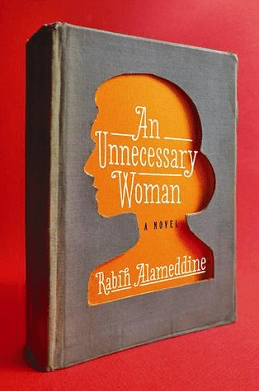
This 2014 novel was nominated for the National Book Award for Fiction.
I am grateful for the members’ insights which I share below, as I was navigating family health crises for this discussion.
From Patricia:
In An Unnecessary Woman, Rabih Alameddine weaves an engaging tale about an unlikely survivor. Despite a dismal childhood, a dreadful arranged marriage, and the misfortune of living in war torn Beirut, Aaliya survives by immersing herself in a world of books – first by reading constantly in the small bookstore she managed and later by translating into Arabic many long and difficult works. Although this elderly Beiruti woman observes: “Most of the books published these days consist of a series of whines followed by an epiphany,” the tale of her life ends with an epiphany of sorts. When a flood threatens to destroy a mountain of boxes containing her many translations, she discovers that she can survive this catastrophe only with the help of several elderly women in her apartment building. Because of the unlikely and untested bond between these women and Aaliya, some of her translations may survive, and she begins to believe she is not an unseen or unnecessary woman.
From Liz:
I enjoyed the story and the characters. I also liked learning about the Lebanese civil war. I found the book sad but hopeful at the end. I disliked the massive number of literary quotes in the book – they became overwhelming for me and took away from the enjoyment of the story.
From Diane:
I recommended this book and really enjoyed it. The author is Lebanese and I learned about the Civil War which deeply affected the protagonist, Aaliya’s life. I found the writing full of wit and also sadness. Many of the references to books and music were not that interesting to me however and I found myself skipping lots of pages. Aaliya is an introvert who isolates herself and prefers the company of books and music, instead of people in her life.
We appreciated Diane’s suggestion of this nuanced, complex novel.
 Ruth O. Saxton